**I Said NO to Naguib Sawiris. Twice!**
In this section, I’ll share a couple of stories from my business ventures that taught me valuable lessons and I’ll use these lines to reaffirm the importance of nurturing ideas through imagination, emphasizing even more by inviting readers to take this practice to the point of obsession to generate business opportunities.
The first story is recent, from a few months ago in 2025, though it began a year earlier, in April 2024, when I acquired the usage rights to a registered brand with a fascinating history in Mexico.
It’s a brand once used in Mexico by an iconic global hospitality company that, for some reason, became available for purchase. I was the one who had the chance to acquire it, knowing that not only the company I mentioned but at least two other individuals in Mexico were (and are) trying to reclaim it and I bought it intending to negotiate with interested parties or develop it myself if the conditions weren’t right.
So, in April 2024, I acquired it, and by September, it was duly registered. During those six months between the application and registration confirmation with the Mexican Institute of Industrial Property (IMPI), my curiosity led me to research the brand’s history beyond Mexico, and what happened was pleasantly surprising.
When I saw the brand in the United States, I was thrilled.
When I saw it in Hong Kong, my surprise grew.
By the time I reached India, it was clear that investing in the brand was a great decision.
But when I discovered what was happening with the brand in Msr and its future plans, I went crazy.
I was completely captivated by the sophistication with which the brand is being developed in the Middle East, Africa, and beyond, with its nerve center in Msr. So, I dove into everything related to its creators, to the point that my ideas of negotiating the brand in Mexico were nearly forgotten, and my interest in contacting its former owners vanished.
Focusing on the Egyptian alternative, I learned about a company called ORA Developers, dedicated to hospitality and housing developments with a not just modern but futuristic vision, transforming the real estate landscape in emerging nations. Thanks to my curiosity about this company, I soon learned that the mastermind behind it all is an entrepreneur named Naguib Sawiris, considered a pioneer in Egypt’s communications development and a true celebrity in Africa and the Middle East and the more I researched, the more my amazement grew.
I reviewed every article, interview, and page about Naguib Sawiris and just as with the opening of Ele Por Ele and whenever I focus intensely on something that interests me, I studied the brand and the person so thoroughly that it became almost an obsession.
One of the first things I decided to learn, driven by this growing passion, was the Arabic language, to communicate in the original language of the brand’s developers. This was out of respect and as a perfect excuse to learn a new language and I gave myself a year to advance in Arabic while continuing to gather information about ORA Developers and Naguib Sawiris, waiting long enough to secure the brand’s official registration in my name to make it marketable again.
Of these three goals, I never anticipated how challenging Arabic would be. I still feel like a beginner despite the hours I’ve dedicated, but since it’s become a passion and a challenge, I know I’ll eventually communicate with Arabic speakers, especially now that I plan to launch this book.
Along the way, I learned that Naguib Sawiris has not only leveraged his business genius in Africa and the Middle East but also challenged powers like Italy and France. I’m not exaggerating when I say these countries were shaken by what he achieved with his companies entering from outside.
I’m talking about the need for these nations to decide, at the level of their economy ministries and legislatures, to ask him to sell his stakes in the companies he grew, essentially because they became dominant players in an industry as critical as telecommunications. Though not stated in news reports, I intuit that the real issue was that, as a non-European from an emerging nation, their pride couldn’t tolerate his growth and access to such significant information. It was like an affront to their ego, ultimately resolved through diplomacy.
I must clarify that the above is just my perspective, not something I’ve seen in any opinion or article, and I take full responsibility for it.
And as if that weren’t enough, I learned that Sawiris is an opinion leader who practices social an political activism daily, an activity I also enjoy, though I’ve neglected it lately. But I’ll return to it, as emerging nations always need critical voices to challenge decisions about their vast resources.
This is how I became a true admirer of Naguib Sawiris’s work, philosophy, and brand development approach and thanks to the patience I discussed earlier, I spent a full year working on my strategy.
Thus, in January 2025, I saw Naguib Sawiris as the keynote speaker at a communications industry summit in Dubai, where he once again shared his views and captivated the audience with his charisma. From that interview I remember a part where he said his success largely comes from making quick decisions without overthinking, as time can work against you.
After watching that interview, I felt uneasy for missing the event, so I thought, “I can’t afford to let this information slip.”
From then on, I stayed highly alert to such events in the Middle East, which I had to follow personally, since being in Mexico meant I received no advertising about these conventions and that’s how I learned that, at the end of February, he’d be a keynote speaker again at an investment summit in Abu Dhabi, less than three weeks away.
I immediately checked the event’s website for tickets, but registration was not only closed, it was an invitation-only event, not open to the public.
So, there was no way to attend… in theory.
In theory, because I contacted the Mexican Embassy in the United Arabs Emirates, begging them to secure me tickets. But regardless of their response, I bought plane tickets and booked accommodation for myself and my wife, figuring I’d manage if the embassy didn’t come through.
I also consulted AI for ideas, and one was that many people attend such events hoping to beg for entry or even stay outside, just for a chance to contact key figures.
So, with plane tickets and hotel booked and the idea that I’d stay outside if necessary, I was determined to contact Naguib Sawiris by any means. If I didn’t find him at the Abu Dhabi conference, I’d visit his office in Dubai the next day.
But that wasn’t the case. Five days before the event, the embassy informed me that tickets would arrive via email, and I just needed to fill out the requested details.
I don’t know how to explain it, but I never doubted I’d be at the event. I was 100% certain, but you always need alternatives. No matter how sure your intuition is, you must have a Plan B, C, and D.
And february 26 arrived, the date of the Abu Dhabi conference.
My wife and I woke up early to arrive with time, as it was an hour-and-a-half drive from our hotel in Dubai. We’d been there two days early, thrilled because it was the perfect excuse to celebrate our 20th wedding anniversary in a city that captivates with its multiculturalism and business atmosphere. Our spirits were high.
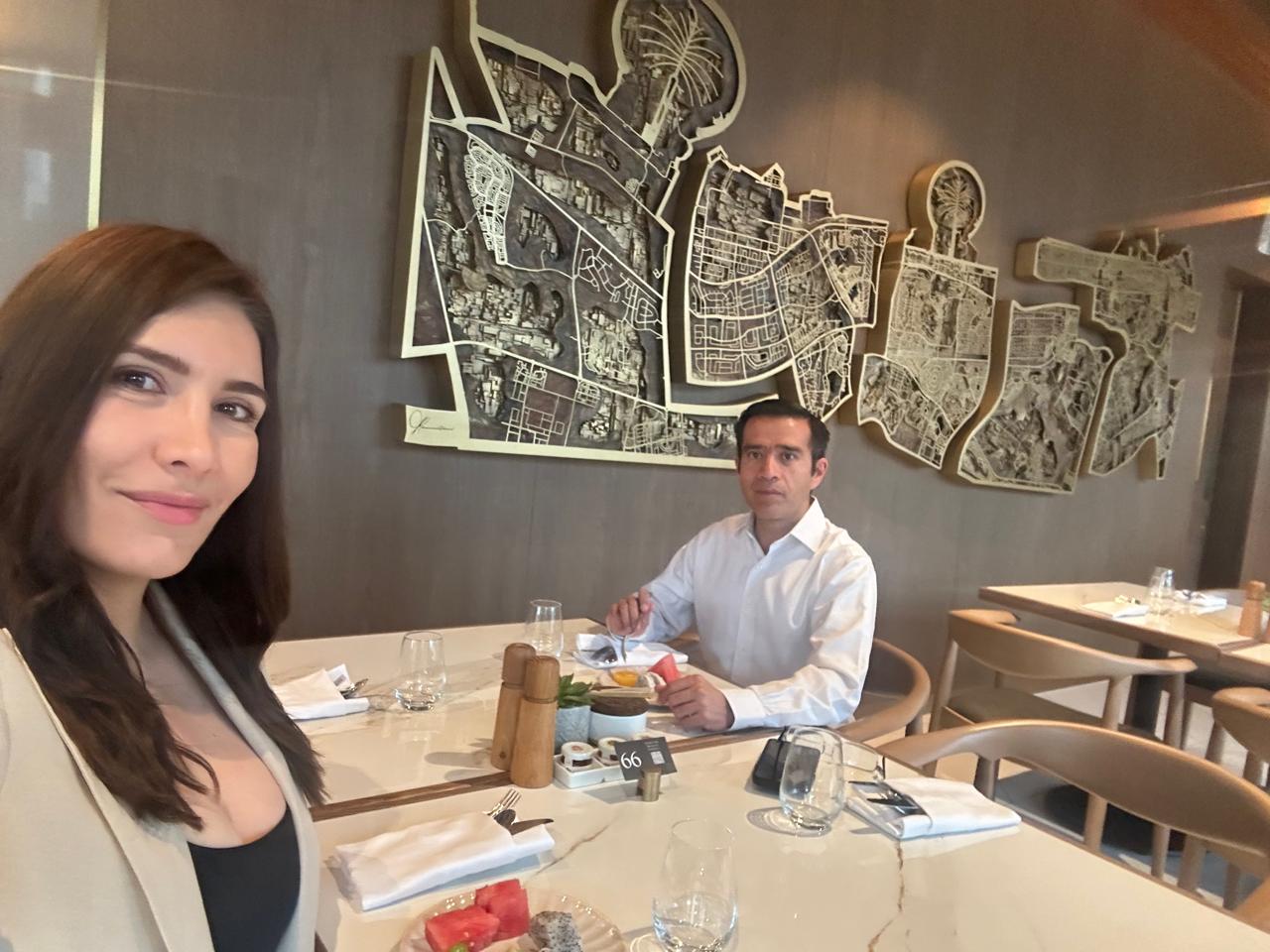
We left at 7:00 a.m. to register before 9:00 a.m., when the event started, as Sawiris’s conference was one of the first.
Of course!
The organization had him as an anchor for the opening, though not at the very start to allow time for registration, but early enough to ensure everyone was awake and excited.
We attended two fascinating prior presentations about the UAE’s success, with incredible speakers and the recurring theme of quick decision-making for organizational progress. The UAE’s economy minister spoke of laws changing overnight, sometimes in hours, when they realized they weren’t working and could hinder progress. When they talk about speed, they mean it.
Finally, the third presentation arrived.
The atmosphere was charged; people eagerly awaited it. You could feel the admiration in the audience. The previous speakers were brilliant, articulate, and offered invaluable information, but this conference was not only brilliant—it was interactive. We laughed at Sawiris’s anecdotes about extortions he faced due to emerging nations’ policies, something those of us familiar with the whims of improvised leaders understand well.
Pure genius.
The audience gave a standing ovation at the end and while this was happening, I rushed to the exit to try to interact with him, but there were too many people crowded around, and he was accompanied by two people acting as some sort of bodyguards keeping everyone at a distance because otherwise it would have been a total chaos. You could see the disappointment on people’s faces who wouldn’t get to greet him or take a photo. But with a year-long plan, I wasn’t going to stand idly by. I followed him from a distance as he quickly headed to the exit. I thought he was leaving, with a car waiting to whisk him away, and I was already planning to visit his Dubai office the next day.
But no!
Instead, he was led to a lounge in the hotel’s reception, away from the conference bustle, where he sat to talk with someone for about ten minutes. You could see them, as it wasn’t closed off; you could’ve even walked by and greeted them if you were bold enough. I stayed a few meters away, watching the bodyguards, who were nearby but distracted, no longer focused on the conversation happening in the hall.
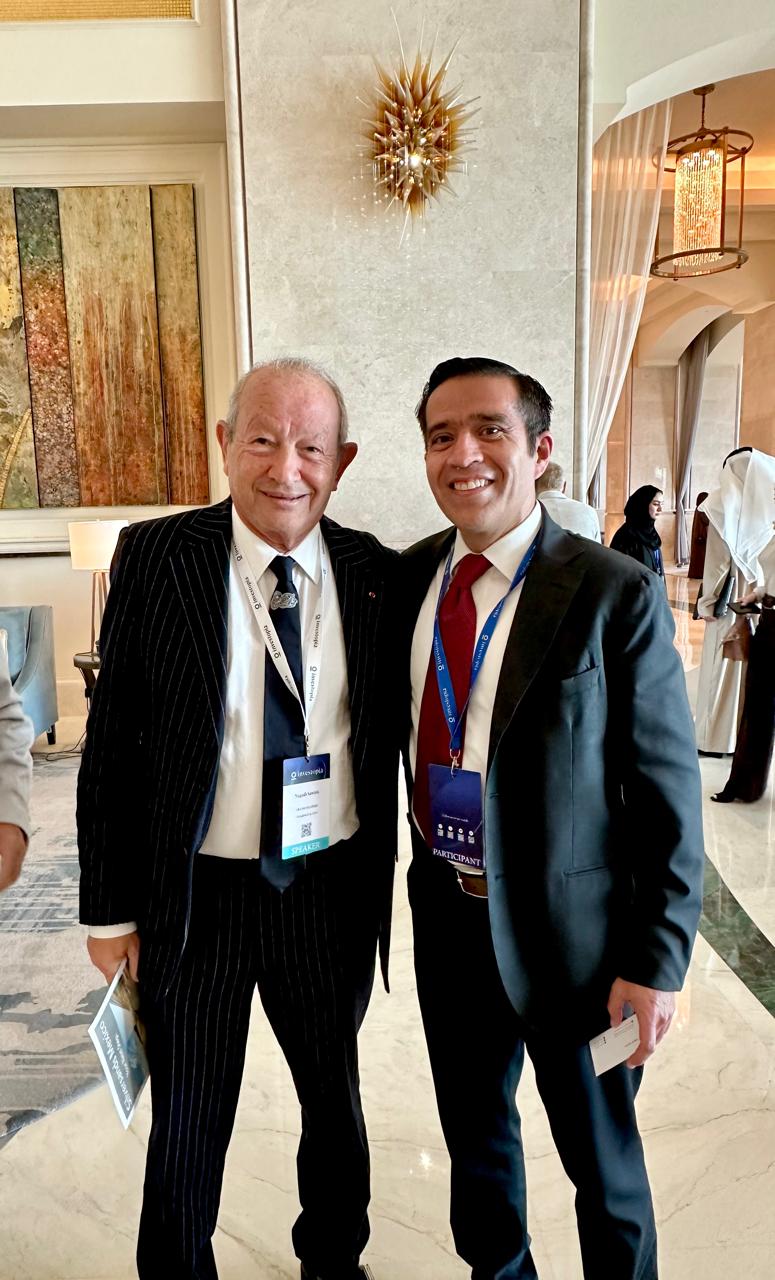
Suddenly, Sawiris stood and walked toward the exit, right where I’d been sitting, observing from afar. It was incredible—I just stood, extended my hand, and introduced myself:
– “Good morning, Engineer Sawiris. My name is Eduardo, from Silversands Mexico. I want to congratulate you on your brilliant conference…”
Before I could continue, with a surprised gesture, he asked:
+ “Silversands Mexico?”
– “Yes, that’s right. Last year, I bought the rights to the brand that coincidentally matches yours, and I came here to ask you to bring your version of Silversands to Mexico.”
+ “I’d love to!”
+ “I’ll need you to find a beachfront plot near an airport and please, I don´t want one of those saturated beaches you have in Mexico. I want a place where we can pave the way for a Silversands hotel and you send the information to the email on this card.”
Then, he handed me his business card.
I was in disbelief, thinking to myself, “This is what he means by quick decisions!”
It didn’t take him a second!
+ “Do you have your business card?”
It took me some moments to react.
– “I, I, I… don’t have one, but in this brochure you will find information about the business potential for the brand in Mexico and some beachfront plot options I’ve already researched. While some meet your specifications, I’ll look for alternatives.”
+ “Have you seen my Silversands hotel in Grenada?”
– “Not yet, but I plan to see your work firsthand, though I had to come find you first.”
+ “Great! Send me the information to the email, and I’ll respond when I can. We’ll meet later to discuss contracts and fees.”
– “Perfect! I’ll gather more information and get to work as soon as I return to Mexico to have it ready per your requirements.”
My comment about returning to Mexico seemed to trigger something in him, and before we parted, as to clarify our brief talk, he said:
+ “Wait. You said you came from Mexico just for this, right?”
– “Yes, yes, yes. My only goal in coming here was to meet you and discuss this in person.”
+ “Then let’s meet Friday at my office to discuss details.”
And there I was, with a proposal to meet and discuss business details with the living legend, as he’d been introduced at the conference. I don’t know how many attendees would’ve given anything for that opportunity, and I was getting it on a silver platter.
A year of research, studying Arabic, obsessing over every detail about him and his companies. A year of dreaming, pushing everything to the limit, using all my imagination to make things happen, and deciding that the best strategy was this trip with no certainty but immense confidence in everything I’d done to tell Naguib Sawiris in person how much I wanted to bring his Silversands to Mexico.
All the hours of study, nights and days daydreaming, ideas generated to get here—it all boiled down to this moment, and it turned out far better than I could’ve imagined.
And I said no!
He insisted.
I refused twice!
By the time I came back to my senses, I had neither the meeting nor the deal.
His final response was:
“Thank you for contacting me. For now, I have no plans to expand to Mexico.”
And that’s exactly how you ruin the chance to do business with the Middle East’s business titan.
But this isn’t the first nor the last business experience worth sharing.
Learning never stops, so I’ll continue with my second anecdote, which actually happened earlier, in 2019.
By then, I’d long been dreaming of a plot, having acquired the first three properties to found Ele Por Ele, with two doing very well. I began dreaming of a fourth property with specific characteristics: it had to be at least 40,000 m² and up to 200,000 m², rustic, on the city’s outskirts but not too far to attract people to my go-kart track, and eventually eligible for approval by the Mexican Motorsport Federation for national and international competitions.
And it had to be very cheap.
As karting competitions went by, I fueled my dream more and more. I became obsessed with that plot, just as I’d been with opening Ele Por Ele and later with the Sawiris deal. Nothing would stop me.
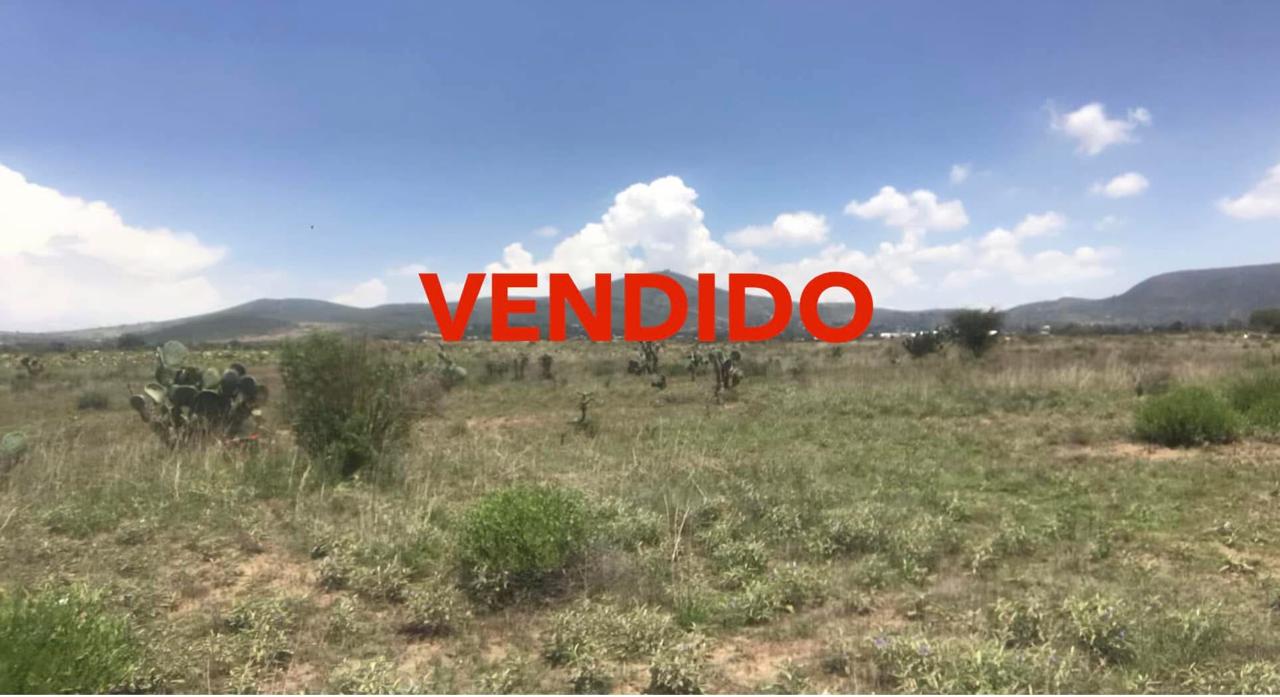
My desire and obsession were so strong that one day, browsing auction properties, I found exactly what I was looking for and on September 11, 2019, I was the highest bidder for an 80,000 m² flat plot in San Agustín Tlaxiaca, a small town 15 to 20 minutes from Pachuca, my hometown, at a bargain price, perfect for attracting motorsport enthusiasts.
Practically tailor-made, I could hardly find anything more ideal for the dream I’d been nurturing for a year and a half. By January 2020, it was duly registered to Ele Por Ele and during the months between the purchase and registration, I had time to reconsider and realized that buying the plot was one thing, but building and maintaining a track as a lifelong business was another. I also considered that other racing categories might pull us away from karting. So, my plan shifted from building a go-kart track to selling the plot. And as I explained earlier about my passion for sports and watching my children grow in them, my entrepreneurial dreamer’s mind changed plans to build a gym on a plot I own, perfect for my daughters to develop their gymnastics skills under my vision and facilities. A gym requires fewer resources than a karting track, and in gymnastics, you can train in one place without needing to change every two or three years, as in motorsport.

In early 2020, Mexico enjoyed a good economic situation, with optimism and momentum. I quickly had interested buyers, but no one committed, as properties that size had relatively limited demand. Nevertheless, I knew the sale would come soon, enabling the gym and other pending projects. But on February 27, the government declared the COVID-19 emergency, which we thought would last a couple of weeks but turned into months and even years. In Mexican schools, in-person classes didn’t resume until 2023, though most activities had restarted by mid-2021, with devastating consequences for businesses, many of which closed permanently after a year and a half of uncertainty.
For real estate, the COVID-19 emergency was especially brutal. The optimism turned into a scenario where many stopped investing as the lockdown extended, needing to plan resources at least medium-term. For many businesses, it became about survival, not profit.
But as always, I got obsessed and kept offering the property through every possible channel. With my mind fully focused on the sale, I thought I could close it in May for my son’s birthday. When that didn’t happen, I aimed for June for my wife’s birthday, then mine, but nothing.
I mention this quickly in a few lines, but when I talk about setting these dates as goals, I mean the obsession I keep emphasizing. It’s hard to explain—a state of being where you focus entirely on the goal. You think, dream, and nurture that single purpose, and deep down, you know it’ll happen.
At some point, my wife mentioned the plot to a family acquaintance in real estate, who said he might have an interested buyer and he actually didn’t take long to follow up.
On Tuesday, July 7, he called to meet at his house and present an offer for the plot.
I remember receiving it with the same surreal feeling I had when Naguib Sawiris said he loved the idea of a Silversands Mexico. The offer was very good and in cash. In that moment, I felt like I was floating on clouds—the realization of a dream, an obsession fulfilled exactly as I’d visualized.
And that wasn’t even the best part! The best was when he told me something like:
“If you give me an answer by Thursday, we’d be signing the deed on Monday at this notary.”
We’re talking about Monday, July 13, 2020. I know this exactly because that day we were celebrating my daughter’s birthday, and it’s also the same date I registered the name Ele Por Ele with the Mexican Institute of Industrial Property. In fact, I can almost say my daughter and the company share the same birthday.
And there I was, receiving this fantastic offer in the middle of the pandemic, when everything was at a standstill and practically no one would spend money on real estate, on a date that couldn’t have been more special.
Two years of dreaming about finding the land, imagining and reimagining the possibilities, searching for opportunities everywhere, talking to potential clients, not losing faith despite being in the midst of one of the most unexpected periods the world has ever faced, and as the cherry on top, picturing how I’d arrive at my daughter’s birthday on July 13 with my pockets full thanks to this magnificent sale.
And I said no!
He insisted.
I refused twice!
That’s right!
Believe it or not, that’s what happened.
Remember when I said in the introduction that you’d stumble over the same stone multiple times?
Well, consider these two anecdotes as proof of that statement taken to the absurd.
– ‘But why did you say no?’
The students and attendees at the lecture asked me, their faces a mix of surprise, disbelief, and even indignation.
And the answer was simple.
– ‘Because I was foolish.’
Ambition can lead you to make a mistake as big as turning down the local magnate for the sale of a highly coveted piece of land. When I spoke with the sale promoter his exact words were:
+ You don’t have to give me an answer right now. Think about it, and if you respond by Thursday, we’d be signing on Monday at this notary.
I told him I’d think about it just to pretend, but in my mind, the sale was already done.
BUT, I suppose it was on Wednesday when I got a call from someone I’d heard about, saying he was investing in real estate at the time.
+ ‘Good afternoon, Eduardo, I’m… and I’m calling because I got information about the land you have for sale, and I want to tell you I have the following offer… Are you interested?’
The offer was 5% higher than the one I’d received, also in cash.
– ‘Yes, of course I’m interested.’
+ ‘Great, I’d just ask that we go see the land in person on Monday and finalize the agreement.’
– ‘Perfect, see you on Monday.’
And the long-awaited Monday arrived—my company’s birthday, my daughter’s birthday—and with the expectation of closing the deal, I went to the appointment. We saw the land, he asked a few questions, made one or two comments, and concluded:
+ ‘Well, I like the land. Just let me verify the information on my own to ensure everything is in order, and we’ll follow up to close the deal.’
Since I was 100% confident in what I was offering, I thought, ‘The only difference is that the deed won’t be signed on July 13, but oh well’:
– ‘Perfect, I’ll wait to hear from you.’
A few days later, the promoter of the first offer called to say I hadn’t followed up, which he found odd. Feeling overly confident, with my big ego bursting off my chest I told him:
– ‘Guess what? I got another offer, and that’s why I haven’t reached out.’
+ ‘Well, our offer still stands for signing, but don’t take too long, or my client might back out.’
Two weeks passed without a response from the second offer, and by the time I contacted the first promoter to say I was ready to proceed:
+ ‘Guess what? It’s no longer available. My client had an unexpected issue and spent the funds allocated for the land purchase.’
And that’s how you ruin a sale to the most important local entrepreneur, who, by the way, later made it very clear to me that he calls the shots in his area.
I ended up selling that land in 2023, not without first falling victim to a scam, and at a price 30% lower than the first offer I received, with post-pandemic inflation further reducing the value of the 2020 offer.
In December 2021, a ‘client’ came along, and I signed a dream contract for the sale of the land, for an amount 50% higher than the first offer I’d had, that I thought “It was worht the wait”. The contract included a clause stating payments would begin at the end of January 2025, after fencing the land with cyclone mesh to secure possession, with both of us splitting the cost. I saw no issue with this because the city was full of advertisements featuring his company’s logo, and not only that, he was a sponsor for a few months of the city’s soccer team, which is somewhat famous and put Pachuca on the map. Soccer fans in Msr may know it, as it has played in a Club World Cup against Al Ahly at some point. So, I contributed money, and he immediately started working on the land. But at some point, he told me a group of people stopped him, claiming the land belonged to the community.
Two days later, I got another call from my acquaintance, the promoter, saying they were repeating the 2020 offer, for immediate signing the next day if I wanted.
– ‘Under other circumstances, I wouldn’t repeat the mistake I made three years ago,’ I told him, ‘but I have a signed contract that doesn’t allow it.’
I was tied up. On one hand, a contract obligated me to wait at least six months for it to lapse if conditions weren’t met; on the other, the local entrepreneur made it clear he’d buy the land when he decided, on his terms, and I failed to understand that at the time.
The dream contract turned out to be a scam. As I followed up on this client, signs of dishonesty emerged. Though I spoke with him by phone, the calls were only to stall, assuring me that if he didn’t buy the land, he’d find a buyer and charge a commission, while already presenting himself as the new owner. So, I went to confront him at his business, where we’d signed the contract, only to find it had been transferred to someone else. Then I went to his house in an upper-middle-class neighborhood where we’d first discussed price and conditions, only to learn he was no longer there. It was as if he’d vanished overnight. To top it off, I received information about someone from Querétaro (a city 150 km from Pachuca) looking for him for fraud in a home sale, and they weren’t the only one—there were at least two others in Querétaro seeking him.
They even contacted me:
+ ‘If you’re in Pachuca, you can look for him at these addresses.’
– ‘I went to both places, and he’s not there anymore.’
Piecing it together, I realized the money he got from the Querétaro scams was used to relocate to Pachuca, flood the city with his advertising, and even appear as a sponsor on the professional soccer team’s shorts to convince people of his company’s importance.
In this case, I was deceived with the advance payment for fencing my land, which hurt—yes, for the money, but more for my pride and because it cost me a sale. Still, it’s nothing compared to the frauds in Querétaro, and I don’t know if they ever caught the scammer.
In the end, I sold the land to the municipality at a relatively modest price, and today it hosts a sports complex.
The purchase decision fell to the person who made the first offer, no longer as a private individual but as a public representative, and honestly, he earned my full respect because he taught me a great lesson.
What comforts me from this experience is that the land ended up with the best possible client, serving a social purpose by fostering youth development.
Back to Naguib Sawiris…
To wrap up the case with Engineer Naguib Sawiris, I pick up our conversation where I left off.
+ ‘Let’s meet Friday at my office to discuss details.’ (It was Wednesday.)
– ‘Friday’s tough for me. Can it be tomorrow?’
+ ‘No, I can’t tomorrow. I’ll be busy all day.’
– ‘No problem, whatever time you say, early or late, I’ll meet you wherever you want.’
+ ‘No, really, I can’t tomorrow, but we’ll meet Friday.’
– ‘The thing is, I have my return flight on Friday.’
+ ‘What time’s your flight? If you want, we can meet very early so you have time.’
– ‘I have to be at the Abu Dhabi airport by 5:00 a.m. at the latest because my flight’s at 7:00 a.m.’
I think after my second refusal, he gave up on my foolishness and said:
+ ‘Well, you have my contact info. Send me the information, and I’ll reply when I can.’
And that’s how I let Naguib Sawiris slip away.
In my defense (if there´s any), this exchange happened in a span of two minutes at most. It was incredibly fast, and I was so stunned by his response that I couldn’t think clearly.
It “caught me off guard,” as we say colloquially.
The next day, when I went to his office in Dubai to speak with his personal assistant and explain the encounter I’d had with her boss the previous day, saying I was there to tell her I’d changed my return flight and could meet him on Friday, her response was:
+ ‘Sorry, Mr. Eduardo, but I just spoke with Mr. Sawiris, and his plans have changed. He’s at the airport leaving the country right now and won’t be able to meet you this time.’
I returned to Mexico, gathered the information, sent it to the contacts he provided, and after a reasonable time with no yes or no, I decided to go find him again.
On May 4, I showed up at his office in Cairo and spoke by phone from the reception with his assistant.
– ‘Good morning. In February, I met with Engineer Naguib Sawiris to present an investment proposal for Mexico, and he asked me to send information, which I’ve done. I’m here to reiterate my interest and see if he liked the proposals I sent.’
+ ‘Very well, Mr. Eduardo, give me a few minutes to reach out to him, and I’ll get back to you with a response.’
Ten minutes later, I spoke with the assistant again:
+ ‘Mr. Eduardo, I spoke with my boss, and he says he greatly appreciates your interest, but for now, he has no plans to expand to Mexico. He also says he’d love to meet you, but his schedule is very busy these days. Please leave your contact details and let me know how long you’ll be here, and he’ll try to make time for a meeting if possible.’
I left my details, but the meeting never happened. From news and social media, I saw he was indeed extremely busy those days. He’s someone operating on another level. He came and went from Egypt during the five days I was there—no way he could fit me in.
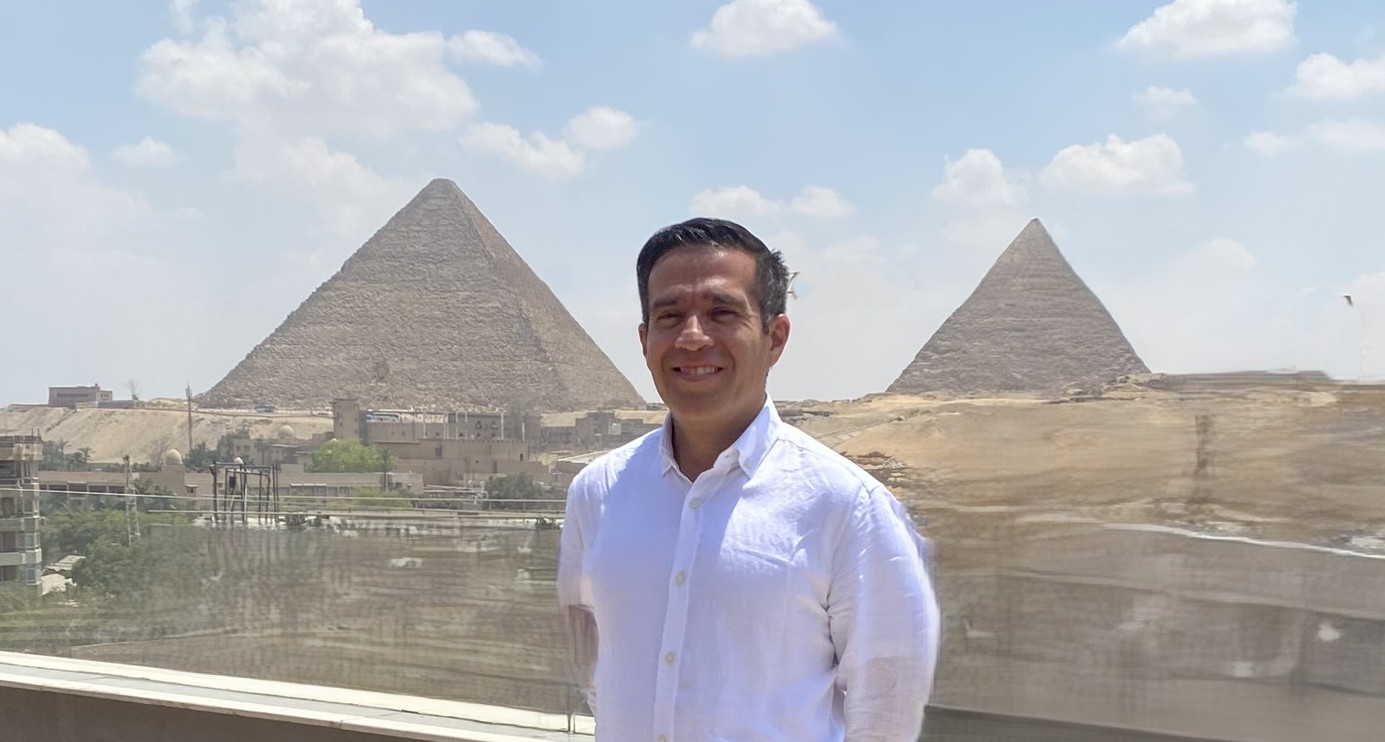
But the incredible thing is that, despite his constant travel between countries, I did see him during my trip.
I was in Cairo those days because there was a concert where Engineer Sawiris had announced his presence, and I’d already bought my ticket. But the night before, his social media showed him inaugurating his Madinat Al-Ward project in Iraq, and I thought, ‘He probably won’t be here tomorrow.’
But he was, surrounded by press and friends, and I was just meters away—maybe three meters from him.
I could’ve been bold and greeted him, maybe even spoken briefly, but he’d already given me an answer, and I felt the place and moment weren’t right, so I just remained a concert attendee.
To put my plan during my Cairo visit in context, I arrived on Sunday and was set to return Thursday night, meaning I was in Cairo the entire workweek, confident that Naguib Sawiris would be in the country, so my plan couldn’t fail, right?
Well, that Sunday, he appeared on the news at a charity event in the afternoon. Monday, he likely traveled early, as his social media showed him in Iraq that night, inaugurating his Madinat Al-Ward project. Tuesday morning, he was seen approving the project’s offices. I thought he might not be in Cairo after all, but the next day, Wednesday night, I saw him at the opera concert.
It never crossed my mind that someone could have such a schedule, but it’s Naguib Sawiris, and I had no idea something like that could happen.
Of course, I wonder what I could’ve done differently, and there are many things I considered but didn’t act on, like notifying in advance of my Cairo visit and requesting a meeting. But I always wanted to add drama to my trips to find Naguib Sawiris, with an element of surprise.
There were also other actions that only occurred to me afterward, and I don’t know how I didn’t think of them earlier or even in the moment.
Obviously, saying yes immediately in Abu Dhabi to his proposal to meet was what should’ve happened first, but since it didn’t, here’s something I can’t understand why I didn’t consider:
Why did I wait until the next day to go to his Dubai office to request a meeting when I could’ve gone right after the conference?
It was 11:00 a.m. when his conference ended—maybe I would’ve found him there if I’d acted immediately.
Why was I so insistent that the meeting be on Thursday when I could’ve suggested meeting later that same day?
He said he’d be busy the next day, but he didn’t mention being busy that same day.
Oh well.
The point is, I let the opportunity slip due to a lack of mental agility.
And so, I close this chapter with two anecdotes about how NOT to act in business. Though my doubts led me to waste a couple of great opportunities, I still consider them very valuable because they taught me lessons that will surely work in my favor in the future.
Here are some that come to mind:
1. **Business happens in the moment.**
When the opportunity comes, don’t hesitate, don’t let your ambition or indecision sabotage you. When I say business happens in the moment, I mean making quick decisions Naguib Sawiris-style—in a second—because if you think too long, the opportunity slips away.
2. **Push your mind to the limit.**
You must desire what you want with your whole mind and body, without fear of taking it to the point of obsession. That’s how opportunities arise—it’s up to you to seize them.
3. **Take risks.**
When there’s uncertainty, the only way to clear doubt is to act and let what happens, happen.
4. **Alternatives.**
If the original plan fails, ensure you have multiple alternatives ready. If you still fail, the experience from failure will become maturity.
5. **Business trips don’t have a return ticket.**
I suppose many people who travel to close deals know this, but it wasn’t something I was aware of. Unfortunately, I didn’t consider it in either of my two Middle East trips, but next time, I’ll make sure to book only a one-way ticket.
There are surely more lessons I could draw from these anecdotes, but these are the ones I find relevant for this story. Beyond continuing with my conclusions, I invite you to leave a message and share your experiences and opinions about what I’ve said here, as that’s how learning is enriched.
—
**Introduction (Re-Introduction)**
The story that gives this text its title and prompts this re-introduction is one of the central chapters of the book I am currently writing. It stems from a lecture I gave to students of the Business Creation and Development program at the Universidad Autónoma del Estado de Hidalgo, the premier institution of higher learning in my home state in Mexico. This lecture forms part of the lessons I, as an entrepreneur, have sought to share with both business students and the broader audience this story may reach.
Today is Friday, June 27, 2025, and as I write the final chapter of the book I began just over a month ago for a Mexican audience, it occurred to me to present the version for Msr (Egypt) first. Surely, you Egyptians will be able to grasp the impact of my brief but formative story far better.
As my goal is to attract readers to my book who are already familiar with my story involving the engineer Naguib Sawiris, I will need to rewrite many chapters. Some passages, however, I’ve left almost untouched, as I believe certain ideas expressed here are adaptable to any entrepreneur, regardless of their cultural background. It may go without saying, but anything related to procedures, legal structures for starting a business, and my considerations regarding fiscal matters have been omitted. Nevertheless, some passages remain faithful to the Mexican version, as they are integral to the narrative I weave throughout the book, and it wouldn’t be possible to maintain the story’s flow without them.
Like the Mexican version, this book aims to convey ideas in a relaxed tone, steering clear of technical jargon and being as concise as my narrative allows. At times, I get carried away with details I deem essential to ensure the message I want to deliver is as robust as possible. I ask the reader for patience when it feels like I’m rambling, as the text blends stories, critique, philosophy, and opinions within a single chapter. I can’t escape my personality, and when a story feels a bit lengthy, it’s because I’ve deemed it necessary to keep it that way.
It’s worth noting that in its original (Mexican) version, I didn’t rely on any technological tools for its writing. Everything you read is my own work, without third-party involvement, and I only used artificial intelligence for suggestions. I can say that 95% of the book was written solely by me.
Unfortunately, I can’t say the same for this Arabic version, as I’ve obviously sought assistance for its review, both from artificial intelligence and my Arabic teacher, Nour Hossam, who´s advice has been valuable as to know which electronic option to use to translate. As a result, the translation will inevitably alter the meaning of my words at times. That said, I’m quite impressed by the current technology in language translation, and I trust that the Arabic version will retain much of the style I’ve tried to instill in the Spanish original. Though, I must say that now that I am coming to an end to publish this book as soon as possible, I´m having obstacles, like the platforms I use in this side of the world not being able to maintain the right to left writing in arabic. I´m doing my best to avoid possible mistakes, but still, I ask the arabic reader for some understanding in this matter.
With that brief clarification aside, I continue with this introduction.
I arrived in Cairo on May 4, early in the morning, and visited ORASCOM’s offices at Nile City Towers. This was a trip I had planned long ago, as ever since I set out to find engineer Sawiris to propose that he bring his business to Mexico, I always knew I’d need to see firsthand what he does and Msr was always the place I knew I’d have to visit sooner or later.
It’s worth mentioning that I made this trip fully aware that there was no chance of closing a deal, as I had already received a response from engineer Naguib Sawiris via email on April 22. But since I had booked my ticket on April 17 and had everything arranged, I decided to go anyway, as I wasn’t about to miss the opportunity to experience a millennia-old culture and broaden my horizons. Sticking to my original plan, on Sunday, May 4, I showed up early at ORASCOM to announce my presence and explain why I was there, even though I already knew the outcome.
I still remember the incredulous looks on the receptionists’ faces when I told them I was there to announce my presence.
+ “So, you came all the way from Mexico knowing there’s no chance of doing the business you’re proposing?”
– “Yes, that’s right. I just want to let engineer Naguib Sawiris know I’m here and that I came to see Ora Developers’ projects firsthand.”
They just shrugged, connected me with his personal assistant, and everyone was very kind and you already know the rest of the story.
I want to clarify that if I didn’t write it this way in the original story, it was purely for artistic reasons. It sounds much more dramatic to say I ventured to Cairo to see what would happen than to admit upfront to the reader that I boarded the plane with a broken heart.
In my family, with my children and my wife, I’ve always liked applying what I call the “surprise factor.” That is, I don’t tell anyone about my plans, and they only find out when I’m already carrying them out or even after I’ve done them. That’s what I did the first time I went to find engineer Sawiris in Abu Dhabi—I showed up without prior notice and got spectacular results, even if only for a moment. So, it made sense to do the same for my trip to Cairo: go without warning and let whatever happens, happen. Unfortunately, the outcome got ahead of me.
But anyway, on Monday, May 5, as I was preparing to sleep in my hotel room, I received a WhatsApp invitation that went something like this:
“Good morning, Mr. Quiroz. This is Francisco, and I’m writing to invite you to give a lecture to the students of the Business Creation and Development program at the Autonomous University of Hidalgo.”
The invitation couldn’t have been timelier, as it came right when I was on the other side of the world pursuing the most uncertain business idea I’d ever had, one that had taught me valuable lessons. This time, my response was an immediate yes.
I quickly realized that upon returning, I’d have a fresh and interesting story to tell. I prepared a simple presentation with very specific points I thought were relevant to share with the students, from the perspective of someone who, like them, chose to dedicate themselves to business. I understand that the goal of such a lecture is to bring those in training closer to experiences they won’t get in school, and from my own experience, I know that hearing from people with real-world experience can be enriching.
At this point, I’d like to make another clarification regarding the adaptation of this book for Egyptian readers. In the following paragraphs of this introduction, the sequence may feel disconnected from the title chosen for the Egyptian market, and you may notice an abrupt shift to another topic. This is because the book’s original purpose is to explain the components I believe a new business should have. Although I initially considered cutting most of the book to focus solely on my story with the engineer Naguib Sawiris, I ultimately decided to keep the content, as I mentioned earlier, as it can be adapted to any entrepreneur, regardless of their cultural context.
As you’ve seen, the book for Msr starts in an unorthodox way, and I consider these introductory words a reset. In fact, I leave it to the Egyptian reader to decide whether they want to explore the entire content or focus only on the story of how I squandered my great opportunity. While it doesn’t affect the narrative’s essence, readers will find some gaps in the Sawiris chapter, as I had prepared the reader to reach that point earlier. For example, a section I consider important for giving deeper context to my first meeting with the engineer Sawiris is the chapter where I explain how I decided to start a real estate company, the strategies I used to choose the business model, access resources to acquire the first properties, and convey to the reader the importance of pushing your imagination and desire to the limit when you have a goal to achieve. In the Mexican version, it’s necessary to prepare the reader for this chapter, but in the Egyptian version, I’ve decided I can take a big leap and skip that preparation for what it means to speak face-to-face with Naguib Sawiris about the possibility of doing business with him.
With all that clarified, I proceed with my introduction.
The Lecture.
From my first interaction with the business students, I was clear about being someone reserved regarding my professional and personal life. I’m not one to easily share my story; in fact, I’ve learned that it’s very true that you should keep your next step a secret (as much as possible). I mention this because I find that a characteristic of business books is the need to be somewhat boastful about achievements. After all, an entrepreneur’s nature often involves ego, which is almost inevitable. This is evident when you read content about prominent entrepreneurs—texts filled with truly surprising stories that, at the same time, feel distant, and the success they describe still feels like a utopia to the reader. I understand that it’s important to sell inspiring stories, but I also realized it’s equally important to maintain a closer connection to ordinary people. That’s why I was motivated to give the lecture and write this book, where I tell the story of an entrepreneur closer to the 50% of the population than to the 2% that represents the exception.
Returning to the idea with which I started the previous paragraph, I’m writing this book from an unusual place for me. Doing so means opening up and sharing stories I would normally keep private, both because of my character and because it wasn’t until after giving the lecture that inspired this book that I realized I do have some lessons worth sharing.
The Presentation.
When I was introduced to the audience, the first words were something like, “Today’s speaker is a partner in Restaurants…” (which is, without a doubt, one of the most important brands in my city, Pachuca—an iconic local restaurant). Then they mentioned the school I founded with my wife and in-laws, and finally, the real estate company I started on my own.
While it’s always been a source of pride for me to be associated with the restaurant, the truth is I had nothing to do with its success. That success belongs to my parents, and at most, I leveraged it to build my own path. So, I can’t take credit for a success that isn’t mine. Although I’ll speak from my perspective and share anecdotes I consider my own, there’s always a backdrop of a lifelong entrepreneurial family that has passed down to me, above all, an example of hard work. For instance, as with my parents who were able to stablish an iconic restaurant in my hometown, my grandfather was a succesful entrepreneur at his time, having what was the best ballroom in town and, in fact, the family still maintains one of the best properties in downtown Pachuca, which was the heritage my grandfather left. Thus, I can proudly say I am part of one of the best known surnames in the city, when it comes to hard work. But I am just one small part of a big family dedicated to local business.
What I’m getting at with this explanation is that in this book, you won’t find stories about the brilliance of a great, established entrepreneur or achievements that culminate in opulence.
No!
In this book, you’ll find the story of an entrepreneur who is part of the small and medium-sized enterprises that contribute 72% of jobs and over 50% of GDP in Mexico. In the same vein, regarding Msr, artificial intelligence tells me that the UN and World Bank report that Egyptian small and medium entrepreneurs contribute approximately 50% of GDP and generate between 60% and 70% of jobs. So, the data suggests I’m not too far off in this regard. I can assure you that, like the Mexican version, you’ll find the story of a modest entrepreneur who hasn’t yet reached where he wants to be and faces daily challenges. An entrepreneur who struggles with tax payments, has to find ways to meet obligatory expenses, and often must set aside what he wants to do for what he needs to do—but who doesn’t stop pursuing the ultimate goal of financial freedom.
The Book.
In it, you’ll find what I believe a company is and why someone decides to become an entrepreneur. You’ll find suggestions I consider crucial to implement from the start, even before operations begin, which someone without experience might overlook. I’m referring to the fine details that can make your initiative stand out from the rest from the very beginning.
I’ll also talk about a particular strategy that worked very well for me to secure funding and start a new company from scratch with relatively little money. Just as I discussed considerations before starting operations, I’ll also cover what’s essential to take care of once the company begins operating.
Since the book aims to present real situations, I’ll also share examples of the mistakes that are part of any entrepreneur’s business education when venturing into independent work. Yes, it’s true what they say: you learn from your mistakes. But trust me, you can trip over the same stone one, two, or three times, even when you think you have all the experience.
Finally, I’ll share a series of recommendations about things that cannot be missing from your entrepreneurial journey, related to your image and the importance of never stopping investing in your education.
As an additional chapter, I’ll include an account of my trip to Cairo and share my perspective after having the opportunity to visit that marvelous city, even if only for five days, I’ll try to offer an opinion on what I experienced.
My name is Eduardo, and I invite you to read this story of one of many entrepreneurs forging their path in the business world. While you’ve already read about some of my missteps, you’ll also find strategies that have led to my successes, aimed at helping you start your own business story.
**Chapter I. Why Start a Company?**
*Why start a company?*
That was the first question I posed to the young students in the auditorium, and the responses were what you’d expect from anyone interested in starting a business:
– Because I have ideas I want to put into practice.
– Because my family has a business, and I’m interested in continuing it.
– Because my family has a business, and I want to have my own.
– Because I want to depend only on myself.
– Because I want to create jobs.
– Because I already have my business.
Among others, these were the responses I received, and throughout this book, I’ll try to address each one, as the reasons for venturing into starting a business seem universal and worthy of exploration.
I’ll begin with the two reasons why I think it’s important to start a company. Before diving into the topic, I should note that these are the reasons I believe in now, not necessarily the reasons I had when I started my company, because, as they say, the only constant is change.
With that said, I begin my story.
**Freedom**
I’ll start this section with a critique of how the term “freedom” is used in some current business or financial contexts, to distinguish it from the concept of freedom I want to convey. I find it curious that one of the more prevalent stances today—what I’ll call one of the most optimistic, though words like exaggeration, self-complacency, or even extremism come to mind—presents freedom in commerce as the salvation of civilization.
It’s true that commerce moves the world, and I don’t know if it’s always been that way, but it certainly has been for a long time. There are significant examples today that attest to this, like Dubai, a small territory that decided to pioneer modernity in all areas of business and is now a reference point in the Middle East. Dubai’s example was followed by other territories in the United Arab Emirates, then by countries like Qatar and even Saudi Arabia. Today, these countries and their futuristic projects are not only references in the Middle East but are transforming the world.
So, yes, optimism tells us that giving freedom to commerce and entrepreneurs is an exemplary way to advance society. But I’m not sure it’s the salvation of civilization, as I’ve seen expressed many times in business contexts. That feels a bit overblown. While I’m an entrepreneur and aware that this is the game we’ve created and must play, I can’t help but wonder if what we call civilization and the customs we’ve built around it are the best way to live in this world. On the other hand, there’s the example of the United States, a country that led the world in the 20th century largely due to its commerce but is also a nation of materialistic, sometimes senseless culture, with deep economic contrasts and significant social disparities.
The above is my simplified stance on what I called optimism regarding the concept of freedom in business. Now, I’ll move on to my own concept, which is somewhat simpler and, hopefully, more practical.
**Financial Freedom**
If you read various publications on financial freedom, you’ll notice it’s a concept without a single definition, so you can give it the meaning you choose. I’ll start with what I consider the most basic concept of financial freedom: achieving income that covers your basic needs, such as food, clothing, and shelter.
Because, in reality, you don’t need more.
But in this book, we’re talking about entrepreneurs, and when you want to be an entrepreneur, you’ll inevitably want a good location for your business, quality office equipment, advanced technologies, a functional office, a capable team, etc.
And those are just the needs as an individual and entrepreneur. In my case, as a family man, I also want a good school for my children, a nice car, and leisure activities.
So, financial freedom requires substantial financial resources. If you look closely at the points I mention, they only cover the basic needs of a business and a family, as I haven’t yet touched on the complementary part of my concept of freedom.

**Free Time**
My concept of financial freedom also includes having the time and resources to do what you love without limitations.
This is where I begin a story that may help readers identify with and draw ideas to motivate them to pursue the entrepreneurial path. As I mentioned in the introduction, I might elaborate at length, but I reiterate that when this happens, it’s because I’ve deemed it necessary to make my point clear.
**Sports**
I’ve always liked sports, and before my children were born, I thought about instilling this habit in them, as many parents do, and I believe it’s the right thing. However, as both a teacher and a father, I often see parents who have already mapped out their children’s paths. They’ll be football players, basketball players, or swimmers, and they’ll train at such-and-such academy. In some cases, the kids haven’t even been born, or they’re too young to know if they’re interested in the sport their parents have chosen for them, but their future is already decided.
That’s not my case. I always thought I’d wait as long as necessary for them to decide what they wanted to do in sports. If I were a parent who had planned their path before they grew up, my kids would likely be tennis players today, perhaps frustrated and upset for being forced into an activity they don’t enjoy, as I’ve seen with many kids and young people I’ve worked with. There are even testimonies from accomplished athletes who’ve expressed their discomfort at being pushed by their families into those activities.
Instead, my children introduced me to two fascinating disciplines that I wouldn’t trade for anything today: gymnastics and motorsport.
Being competitive by nature, I go all in. We’re now deeply involved in these sports, and diving fully into a sport requires investing resources to achieve results. There’s no way around it—if you don’t invest, there’s no progress, as with everything.
My daughters’ gymnastics requires us (their parents) to invest in leotards, gloves, beams, bars, inflatable mats, training, registrations, travel, hotels, restaurants, etc. Since we don’t miss a single competition and they keep advancing, the financial demands grow increasingly significant.

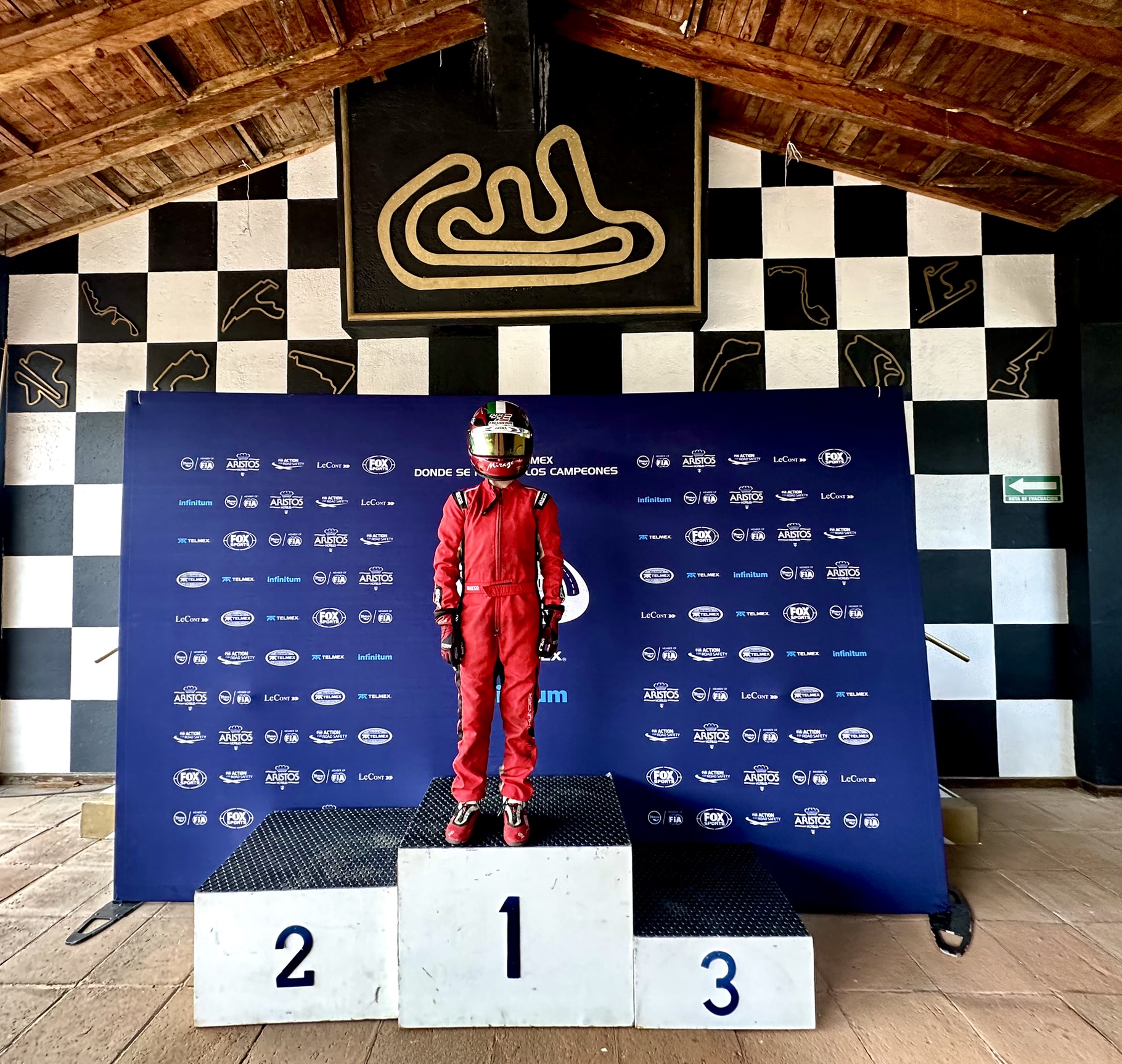
In the case of motorsport (karting), when my son made it clear in 2017 that he wanted to be a race car driver, I knew nothing about the sport. I researched and found a small track where he could try his first go-kart at five years old and what started as a hobby quickly became more serious, so I bought his first competition go-kart just a few months after starting it as a pastime.
The first year of competition was spectacular. If my son didn’t achieve significant results by the end of the year, it was because we were novices and kept getting penalized for details we were unaware of. But it was clear he was serious about racing, so there was no way I could say no.
And when you decide to take a sport like motorsport seriously, you’re fully aware it’s an expensive sport. But to my surprise, once I was in it and saw the costs and requirements, I realized motorsport isn’t expensive. Really, I can tell that motorsport is not expensive.
It’s outrageously expensive!
To put it in context, the cost of a race weekend in a city an hour and a half away can be equivalent to the cost of a gymnastics competition in Cancún (the most known beach destination in Mexico) for five days, including five plane tickets, hotel, registrations, and staying in Cancún for the entire time. Alternatively, a race weekend can equate to the average monthly income for a high-middle-class family of four in Mexico, according to data from the National Institute of Statistics and Geography (INEGI). I assume it’s similar in Msr if you would seek to enter the racing world.
So, achieving financial freedom to enjoy your free time doing what truly excites you isn’t easy, especially when you’re passionate about high-performance sports. But it could also be travel, dining at the best restaurants, buying the best clothes—who knows. In fact, it’s all part of it. No matter your taste, the idea of financial freedom I’m selling in this book is that you can ultimately manage your finances to enjoy what truly fulfills you.
At this point, I want to clarify that while gymnastics alone is already a significant financial challenge, I emphasize motorsport as an example because entering that world showed me that financial freedom truly exists.
I’m talking about the kind of financial freedom where someone dedicates themselves solely to enjoying the fruits of their investments. I mean meeting people who might only need to sit in a board meeting a few times every so often to decide business strategies—or maybe not even that. It’s seeing parents almost exclusively dedicated to their children’s athletic development and realizing firsthand the advantages of not holding back on expenses. For me, that was a motivating factor to want to generate enough resources to cover not just my needs but my tastes, passions, and even whims.
Because you come to this life to enjoy it.
So here’s one of my first pieces of advice:
Never buy into the philosophy that you have to live with what you have and make sacrifices and settle in.
No!
Always chase what makes you happy, and that requires a lot of money because that’s how society is structured, and we can’t change it. So, you have to work hard to find financial freedom, and one way to do that is by starting businesses.
**How to Start a Company**
Having discussed why someone might want to start a company and the purpose behind venturing into business, I now turn to how to start a company, beginning with a very simple question:
*What is a company?*
I could elaborate with definitions about a company as a group of people pursuing a common good to meet societal demands, but I promised to avoid technicalities. So, here’s my concept of what a company is:
A company is an idea.
To dive into this topic, I’ll allow myself to digress a bit with my more philosophical side.
The first philosopher to study ideas was Plato, and one interpretation of his concept is that ideas, despite their abstract nature, possess a degree of reality. Essentially, Plato would say there’s a tangible reality you can see and touch, with clear boundaries, like the chair you’re sitting on or the device you’re using to read or listen to this book. Then there’s another kind of existence that corresponds to the intangible—something you can think about, understand, and even feel, but which has no physical form, so you don’t know where it begins or ends. It’s not concrete, yet it has a very defined character. Plato would use examples like freedom or goodness. You can’t touch them, you can’t pinpoint where they start or end, but you have a clear understanding of what they are.
Regarding companies, they embody the best of both realities in Plato’s concept. While a company starts as an idea, it must be brought into reality—at least partially. Even though that initial idea becomes an office, a building, or a product we can touch and deliver to a client, companies never lose their abstract nature. They remain dreams in progress, fueled by constant ideas that can last a lifetime, even passing to future generations and bringing great satisfaction to their creators.

Let me explain.
As an educational entrepreneur, it’s incredibly gratifying to run into former students on the street who stop to greet you and talk about their lives now. They tell you how what they learned in your classrooms helped them on their professional path, they recall anecdotes, and they even thank you for calling them out when needed. There’s no way to express what a kind word from a former student—or a current one—means.
A school gives you the opportunity to influence another human being with your ideas, philosophy, and even dreams, who in turn will create their own and, with luck, bring them to reality. In other words, your abstract reality—Plato’s ideas—influences others’ realities, and there’s no comparison to receiving gratitude for that.
With this brief explanation, I now begin the topic of creating a company from this logic of ideas.
**Colegio Firenze**
In 2009, my father-in-law approached me and said something like, “I’ve always had the idea of opening a school, but the conditions weren’t right back then. Now that my children are grown and we all have jobs, let’s do it. I want to open a high school.”
I thought it was a great idea, and my response was quick:
“Yes. And it has to be in Tizayuca (a city 30 minutes from Pachuca, where I live).”
In 2007, my wife and I, along with my sister and brother-in-law, had opened a restaurant there, which, by the way, still operates under a franchise model. So, at that time, we knew the Tizayuca market well. There were very few schools in a city that was—and still is—rapidly expanding, and it wasn’t on investors’ radar. We began studying the market, talking to residents and education experts, and the response was consistently the same, leading to the following imaginary conversation:
– “We’re thinking of opening a high school in Tizayuca.”
+ “Yes, a school in Tizayuca is definitely a good option, but why a high school? What’s needed here are elementary schools.”
It quickly became clear that an elementary school was the way to go.
But we thought, “Why give up on the high school?”
– “Let’s do elementary and high school at once.”
– “Well, yes, but we can’t open an elementary and a high school separately.”
– “Then let’s include middle school.”
– “Might as well! We’re already in this, right?”
– “Yes, let’s do all three levels.”
And at this point, my wife said:
– “What if we go for preschool too?”
– “Let’s do it!”
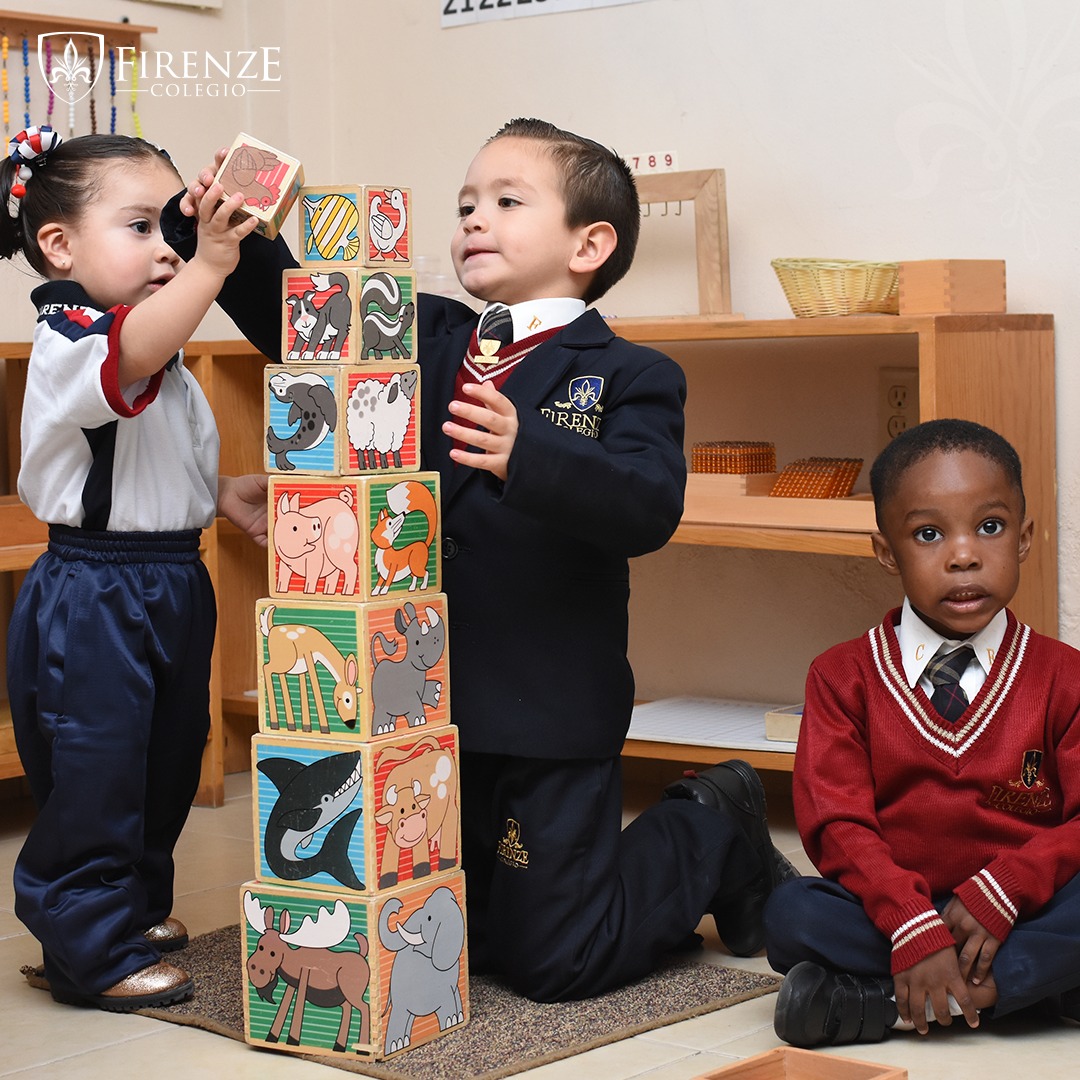
In short, that’s how it happened, and in August 2010, we opened the first school in the State of Hidalgo to launch with all four levels simultaneously.
It was a resounding success!

But why?
First, opening with all four levels at once made us look like a serious company, which was a success in itself. But beyond going all in with educational levels, during the planning phase, we set out to create not just a school but a concept. That’s what we offered to people who came inquiring about enrolling their children.
Let me backtrack to provide context for the story.
In 2004 and 2005, I studied classical drawing and painting in Italy, in the city of Firenze. My wife and I practically spent our honeymoon there. It was a full year where we had the chance to live like locals in this historic city, the cradle of the Renaissance, the era considered the turning point between the ancient and modern worlds (in western terms, of course).
Firenze is where Machiavelli wrote *The Prince*, a work that remains a reference for political science professionals centuries later. It’s where Galileo Galilei found refuge after angering the Church by daring to propose the scandalous idea that the Earth revolves around the Sun. And it’s the land of the Medici, a family centuries ahead of their time, with the vision to sponsor these visionaries to spread their groundbreaking ideas. Machiavelli, Galileo, Leonardo da Vinci, Michelangelo, Brunelleschi, and many others were backed by various Medici rulers to revolutionize human history through knowledge and education.
The world is one thing before Firenze and another after it, as with Msr, actually.
With that said, let me ground this to illustrate how we took this chapter of universal history to create a company around it.
Since the financial resources to open a school with four levels were just enough for the project, our advertising was very basic. A few ads let people know that a new school with four educational levels and an intriguing name was coming to Tizayuca.
*Firenze?*
With this idea in the minds of potential clients and knowing that parents typically seek out schools and visit several before deciding (making schools a forgiving business in terms of advertising), those who were interested came to Colegio Firenze and they didn’t just find educational options for children and youth of all ages; they were greeted with a pitch that Colegio Firenze is an institution based on the example set by the great minds of the Renaissance.
At Colegio Firenze, we draw on humanist philosophy, which places the human at the center of knowledge and encourages questioning and transforming the world. We aim to pay tribute to those visionaries who dared to break the barriers of their time, leading to disruptive inventions like transnational banking or the construction of vast architectural spans.
At Colegio Firenze, a parent finds a school where their daughter isn’t just in the first grade of middle school, group A, but part of the Dante Alighieri group, or in preschool in the Carlo Collodi group, or in sixth grade in the Savonarola group. The user is immersed in an educational concept that sells values like cleanliness, order, and respect. Because that’s what successful companies do—they sell ideas, dreams, and aspirations.
In the case of Colegio Firenze, this philosophy around the Renaissance and humanism boils down to a motto we take very seriously, expressing who we are in a few words:
*“To be Reborn in Thinking. Human and Free.”*
At Colegio Firenze, we believe education is the best way to transform a society. In today’s times, in the context of Mexican society and with the bombardment of information, we witness how values are weakening. The music young people have access to carries deplorable messages, with increasingly basic and degrading language. Media content no longer has the control it once did; anyone with a device can access extreme content on topics like sexuality, drugs, and violence in seconds and for free.
Young people today access content their cognitive maturity isn’t ready for, growing up with a declining value system. That’s why, at Colegio Firenze, fostering critical thinking and considering how we behave in society is urgent. It’s important for us to *be reborn in thinking*—that pride in families living in peace, safeguarding our education and principles, to have a country we can walk through proudly, feeling *human and free*.
We complement this with our vision:
*Colegio Firenze is a leading institution in shaping individuals. Our pedagogical system is an example that transcends our classrooms, fostering a humanist vision in our students and the families who are part of our school, extending beyond the institution.*
Everything in the company has a purpose, an ideal we pursue and constantly build. While the reasons outlined above are closely tied to those established in 2010, they’re not exactly the same, as the crisis of values has worsened, making our purpose even more relevant. It’s now even more necessary to reclaim our humanity.
The *“To be Reborn in Thinking. Human and Free”* of 2025 is definitely not the same as that of 2010, nor will it be the same in 2035, surely.
But what’s the point of all this information?
It’s to consolidate what I’ve tried to convey so far in this book, which I’ll recap.
A company begins with an idea, and as seen in the example of Colegio Firenze, it starts small and grows into something much more ambitious. It’s an initiative that takes on a life of its own and evolves over time. It’s not static but adapts to social changes and the creativity of its members. A company is an entity that seeks to offer society added value, always adjusting to the times.
That idea stems from its creators’ desire to seek freedom in work, as entrepreneurs, by nature, are people who can’t take orders from others. They’re individuals with a vision, a goal, and ambition reflected through the creation of a new business.
Implicit in this is the pursuit of a better quality of life, seeking financial freedom to satisfy not just basic needs but also tastes, passions, and whims. Because, as I said before, we come to this life to enjoy it.
**Starting a New Company**
In 2011, my wife was pregnant with our first child. At that time, we still had the restaurant and a nearly new school, and I was in a comfort zone, thinking what I had was enough. But somehow, before my son was born, something told me I couldn’t stay there. I can’t explain it clearly—it just happened, and my mind started working. There was no specific reason, just a feeling that I had to go for more.
So, I had to evaluate the steps to take, and honestly, at that moment, I didn’t know what I wanted. I didn’t have a single idea, and as we saw earlier, the idea is central to creating a company. It might sound exaggerated, but that idea didn’t come until 2016. So, it was five years until I knew what I’d undertake as a new business, but a lot happened in that time, obviously.
The first conclusion I reached in 2011 was that I needed to start my own company, as all the projects I’d been involved in before were with family—either the restaurants, a business line created by my parents, or the school, founded with my wife and in-laws. It was time to pursue something of my own.
To do that, besides the idea, I needed to find a way to secure the financial resources to consolidate this new initiative.
**The Idea and Financial Resources**
In this section, I want to share with young entrepreneurs the strategy I used to secure funding and develop a business idea that took shape over the long term. While I don’t know the banking system in Msr, companies worldwide have similar protocols, so what I say here can likely be adapted for young Egyptian entrepreneurs.
**Strategy**
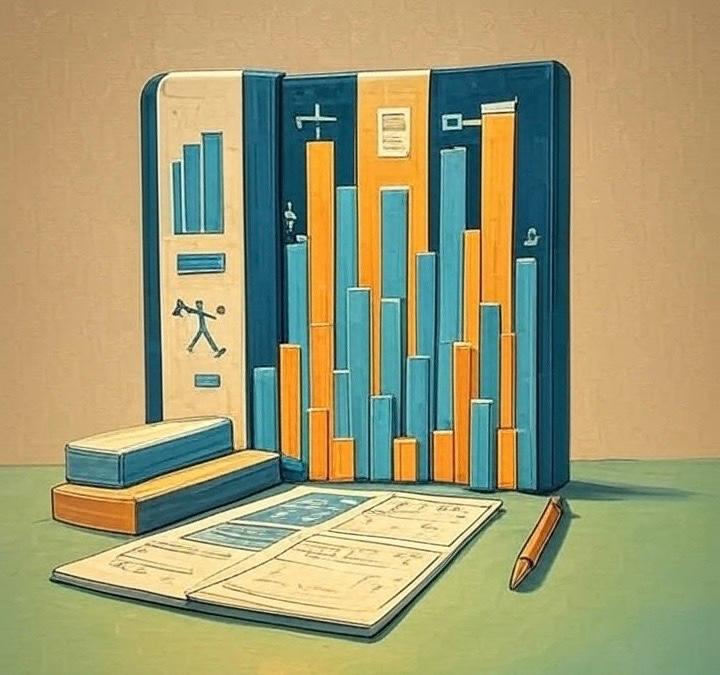
In 2011, I enjoyed relative economic and job stability, so getting a bank loan wasn’t complicated. But after researching the requirements and the amount the bank would lend me, it wasn’t enough to start a company, so I needed to think of alternatives. That’s when I came up with the idea of, instead of seeking a personal loan, applying for a new car loan to buy the best car my wife and I liked at the time.
In fact, I got two new car loans back then (by 2012).
But what does a new car loan have to do with securing funds to start a company?
New car loans build a better credit history with banks, allowing you to access better loan offers. The longer the term, the better. So, I took one for about three and a half years.
While paying off this loan with relatively comfortable payments, my wife opened my eyes to investing in a plot of land to build our house. By the end of 2015, we had paid off the cars and bought a plot of land in installments through rudimentary private contracts, which we paid as agreed. The person who sold it to us immediately convinced us to buy another.
By 2016, with a solid credit history and two plots of land that seemed hard to acquire at the time but turned out to be manageable, I decided my new company would be a real estate business.
But it had to be a real estate company with specific characteristics that set it apart from the rest, given the strong competition in the sector. Those initial characteristics were:
1. I wouldn’t act as an intermediary and would only sell properties owned by the company.
2. I’d offer these properties at prices attractive to clients, i.e., below market value.
3. The company would have only one partner.
The first characteristic was easy to meet under the right conditions, as it only required acquiring properties to be sold later.
The second was trickier. Even back then, and still today, I’m convinced the real estate market is far from normal. Prices simply don’t align with the economic reality of most people. Finding affordable properties to buy is already a challenge, and if you plan to sell them afterward, it becomes doubly challenging. But being curious and always researching what I do, around that time, in a conversation with a lawyer friend about this topic, he gave me advice on how it’s easier than you think to find properties in liquidation—foreclosures from legal processes—that are true opportunities and don’t turn into complicated issues, provided you ensure their viability to avoid buying problems.
So, I decided to try the niche of auction properties and found exactly what I was looking for, even exceeding my expectations.
As the saying goes, “He who seeks, finds.”
Having covered the plan for the first two characteristics, only the third remained: creating a company with a single partner. At the time, the only option in Mexico was to register as an individual with business activity. But within that self-imposed requirement, there was another implicit one due to my whim: I wanted my invoices issued under a company name, not my own. I eventually found the solution, but I’ll talk about that later. First, I’ll address how I secured the financial resources to create it.
**Access to Credit**
By this point, the company was already a well-structured idea, so I went to the bank to express my intention to get a loan to buy the first three properties for the company. They informed me about the monthly cash flow my account needed to demonstrate financial solvency. I remember the advisor emphasizing that having that amount saved wasn’t enough; I needed to show money movement. In other words, the bank doesn’t care about seeing a million pesos (for example) sitting in an account; it needs to see activity. The bank expects not just an average monthly balance but for that money to flow without losing that average. There was no way I could have that amount circulating in my account for the minimum three months they required to prove solvency. At that rate, I’d run out of money in three weeks, with no way to show movement. But then I thought:
*What if the same money comes in and out to give the appearance of movement?*
Here’s where I present what, for me, was the success of my strategy to secure financial resources. I’ll admit it might not be the cleanest strategy, but the important thing is that it worked.
As the saying goes, “The end justifies the means.”
Or does it?
To demonstrate financial stability, I deposited money into my account that I wouldn’t touch, corresponding to the recommended average balance plus an extra 20%. For three months, I “spent” that extra 20% plus another 20% of my savings to create the appearance of solvency. Under normal circumstances, this would’ve meant spending 40% of my account’s resources and figuring out how to recover them through sales or activities that generated extra income at the time. But I knew that wouldn’t happen quickly, so I resorted to three tricks.
The first was simple: I deposited a certain amount to my own company, which returned roughly the same amount after a week. I did the same with family members. The second trick was making erroneous payments to public and private entities, knowing that once the “error” was detected, they’d refund the amount. Options for this are somewhat limited, but they exist—you just have to find them. I’m not sure if this still applies, but back then, some insurance companies would refund erroneous deposits after a few days if the reference number didn’t match a real one. The third was similar, involving depositing interest guarantees in bids I had no real intention of participating in, knowing the money would eventually be returned. This was the safest option, as it’s a standard process in auctions. It not only helped show movement in my account but also served as a warm-up for the bidding processes I’d later participate in with genuine intent to buy.
Using this strategy, I learned that it takes an average of 7 to 15 days to get refunds for erroneous payments or for non-winning bidders in public auctions.
After three months, I presented the bank with account statements that gave the appearance of continuous commercial transactions, with money that simply went back and forth but was always the same.
Having done this and still awaiting a response from the bank, on October 19, 2016, I made an offer for the first property I intended to buy for the company, and it was accepted with a payment deadline of five business days after being informed I’d won the bid.
Under the contract’s terms, if I didn’t pay the full amount, penalties would accrue if I requested an extension. But as they say, “No risk, no reward.” The decision was made, and there was no turning back—I had signed.
I received loan approval on October 21, and the funds were deposited on October 24, just two days before my deadline. The other two properties to start the company came weeks later.
Yes, I took a relatively big risk committing to the first property purchase without the loan approved, but I was confident my documents would pass the bank’s analysts. Plus, I still had the balance I’d presented with the application, and while it wasn’t enough to cover that debt, I’d find a way with or without the loan.
Fortunately, it was with the loan money, as otherwise, I would’ve started with just one property instead of three.
Though I must confess, it didn’t happen exactly like that. The truth is, anxiety got the better of me, and during those three months of waiting, I did buy a property—a ridiculously cheap plot of land I easily won at auction. That gave me a lot of optimism and is why I later rushed to make the first purchase as a company.
That first plot was bought in my name and later gifted to my wife, and we still own it.
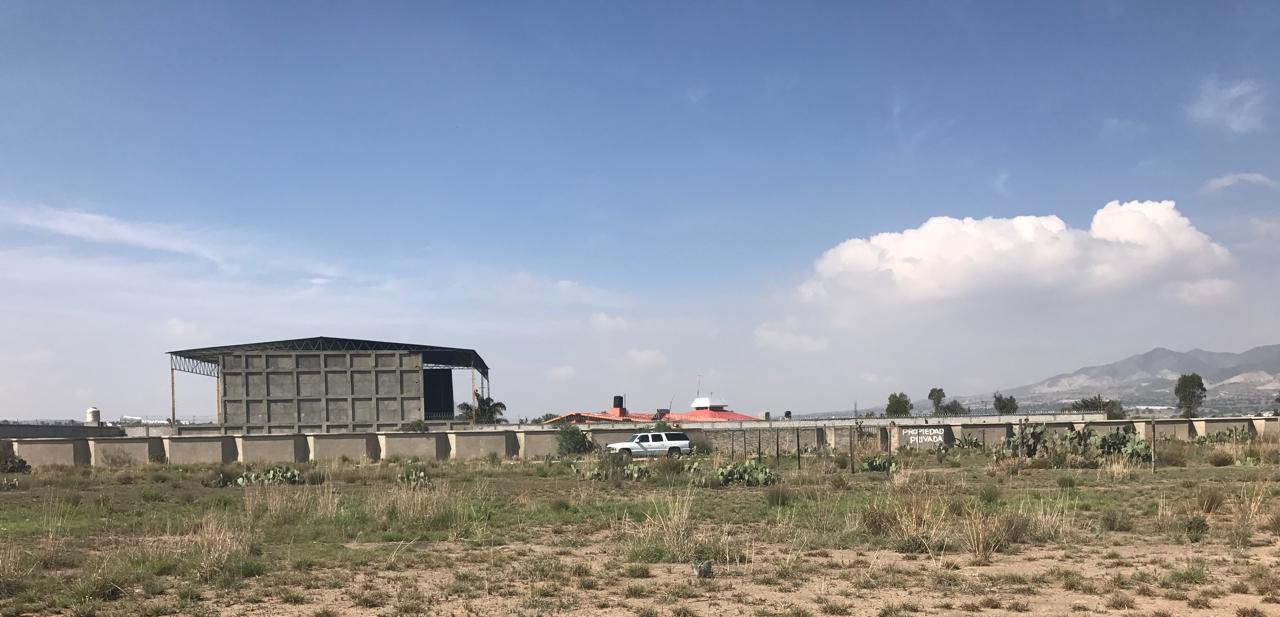
As an interesting note, the plot I bought was listed as 520 m², and the photos showed only grass and a flat plot with no structures. I had personally visited what I thought was the plot, but on the day of the physical handover, the auction staff delivered a walled plot right in front of the one I’d considered. When I saw it, I said:
– “But this isn’t 520 m².”
– “I don’t know, I was just told to hand this over to you,” said the police commander who had guarded the plot for years, shrugging and raising both palms as if to say, “That’s how it is.”
I later measured the plot, and it’s a little over 3,800 m².
In fact, all the properties I bought afterward came with “surprises,” like undeclared structures or extra land beyond what was listed in the sale.
That’s why I say this option exceeded my expectations.
Here’s a recap of this strategy in key points:
– It may not be the cleanest strategy, but I can attest it works for people needing resources beyond their current capacity. It harms no one, and if it works, you benefit.
– It requires patience to wait three months for the account statements to meet the bank’s expectations and not touch those resources during that time (though I confessed I did use the money, but only after submitting the statements).
– It requires even more patience to build the credit history needed to gain credibility when requesting a loan.
Four years of patience!
At this point, I recommend to readers, especially those aged 18 to 22, that now is the time to take every offer banks and credit institutions provide—credit cards, phones, motorcycles, cars, and, if possible, small apartments (these don’t depreciate; their value grows over time). This builds an early credit history.
Obviously, you must make payments on time so that when you reach a productive age, you have better chances of accessing resources to fund your company. Do this earlier than I did, because in the four years it took me to execute this strategy, you’re still in school, studying, without the serious work and family commitments I had at 35 when I started my company.
A crucial part of my recommendation is that once you start your company, cancel all credit cards and those options I suggested for building an early credit history, as they’re just illusions of solvency.
True credit is investing in what will generate more money.
Returning to the commitment I took on when receiving the loan for those properties, which required payments beyond my debt capacity, I had to sell at least one property quickly (within the first six months) to significantly reduce the total amount and make payments more manageable. That didn’t happen.
But you find strategies. Seeing the time and payments pressuring me, I went to a pawnshop with very predatory terms, using my car as collateral to cover the initial payments while I secured a sale. That sale didn’t come until almost two years later, and the pawnshop loan, meant to be temporary, became a heavy burden. A debt I planned to pay in six months stretched to eighteen.
Here, I think it’s worth saying that when you borrow from a pawnshop, it’s only advisable if you can pay it off within the first six months, as you’d pay roughly what a bank would charge for a two-year loan. But if you can’t pay it off in those critical six months, forget it—you’ll end up paying more than double what a bank would charge.
It was exasperating for me, as I had to pay the bank loan, which the pawnshop money alleviated for a few months, but having two debts made it a really tough period I got through as best I could.
Eventually, I sold the first plot, and it went very well. Though the pawnshop ate into much of that profit, it was still very satisfying, as I realized my company was working as I’d envisioned from the start. I’ll elaborate on this in a few paragraphs.
With this story, I cover the strategy for securing funds to acquire the first assets and return to the idea of the company as an idea.
**The Company Is an Idea (Continued)**
I previously mentioned that this new company was born with three self-imposed characteristics, so the first was already covered:
– Only sell properties owned by the company. ✓
**The First Sale**
Finding properties at affordable prices for the public is quite difficult, but not impossible. It’s about keeping your eyes open and seeking opportunities, as they’re always there, though it requires a lot of searching on networks and in person. Auctions aren’t the only place to find deals.
In fact, the street is where you can find the best opportunities, as many people don’t list their properties through agents, either because they’re unaware of this method or have no interest in using an intermediary. There’s no big secret—finding products at attractive, profitable prices for quick resale is possible. You just need to know that listed prices are often very different from what a seller is willing to accept once they receive an offer, especially a cash one. It’s crucial to act fast, as a seller receiving an offer in the first days of listing gets excited and is more willing to negotiate if they see it’s serious. You can’t let it slip, as I’ve seen countless times properties listed by individuals for, say, $700,000 pesos ($35,000 USD) that, if you hesitate, are listed by real estate agencies or brokers within one or two weeks for $2,000,000 pesos ($100,000 USD). They convince the owner their property is worth three or four times more than they initially thought, not to mention it could take three to four years to sell—if it sells at all.
This is a hypothetical example, but the difference can be that drastic once a real estate agency takes over. With today’s advertising, we’re led to believe everything is offered through agents, but that’s not true.
So, in real estate, the strategy is to stay alert, act quickly, and have cash ready.
Now, onto my first real estate sale.
The second property I acquired with the loan funds was in a small town called Los Naranjos, home to a sugar mill in the municipality of Cosamaloapan, Veracruz. I found it out of curiosity, drawn to its location and history. It was practically the best plot in town, offered to the highest bidder.
With cash in hand, I made an offer and won the property at a minimal price—about a third of its cadastral value. This was at the end of 2016, with a notarization process that normally takes three to four months, so I calculated I’d be offering the property for sale around March 2017.
Despite having studied the real estate market and planned a strategy that was working, I was still new to this market. When I acquired the property, I appointed a notary (a lawyer handling property transactions, among other things) in Veracruz (about 500 km from my home), where the plot was located, while I’m from Hidalgo.
Two years passed, and that notary did nothing. Despite calling his office and being assured the process was underway, he never did anything. This happened because I was ignorant.
Let me explain.
In late 2018, during a conversation at a gathering with friends, someone mentioned their notary was handling a property transaction in another state. That was a revelation for me. For two years, I thought a notary could only operate in their own state, but no—a notary can handle transactions anywhere in the country, as long as everything is clear.
Some might laugh at what I’m saying, but as I said, I was ignorant.
I didn’t hesitate to appoint a notary near me, and the process was completed in about three months, which is typical when the property isn’t close to your location. Once I did, and could announce the sale of the town’s best plot at 20% below market value, an offer came immediately. The buyer even told me he’d wait until the property was fully registered in the Public Property Registry to complete the purchase.
In other words, I sold the property before the formal notarization process was complete. Had I done this in 2016, I would’ve avoided the costly pawnshop loan and nearly paid off the bank loan for the three properties. But as they say, “If only” doesn’t exist, and you learn from everything. By that time, I’d already paid more than double for the pawnshop loan and was about to finish paying the bank loan normally.
In clearer terms, of the total amount I borrowed from both loans, I ended up paying 100% of the debts plus 130 or 140% in interest.
Very, very expensive.
To put it plainly, in May 2019, I sold the first property, over two years later than planned due to my ignorance. If you set aside my mistake and imagine I’d appointed the right notary from the start, the reality is that I sold that prime plot in no time. Once the documents were ready and I could finally announce it, the buyer expressed interest in three days.
Why did I sell it so “quickly”?
Because the property’s location is unbeatable, practically an icon in the town, and its price was very attractive.
I still remember the buyer’s wife’s face when the notary read the sale agreement and mentioned the price I’d bought the property for two years earlier. She opened her eyes, a mix of disbelief and frustration with herself, as if thinking:
“How didn’t we know about this sooner?”
As a note, even selling the plot 20% below market value, the sale meant nearly a 400% profit for me. That’s why I said earlier that it showed me my company was working as I’d envisioned.
And so, my second characteristic was covered:
– Offer properties at below-market prices. ✓
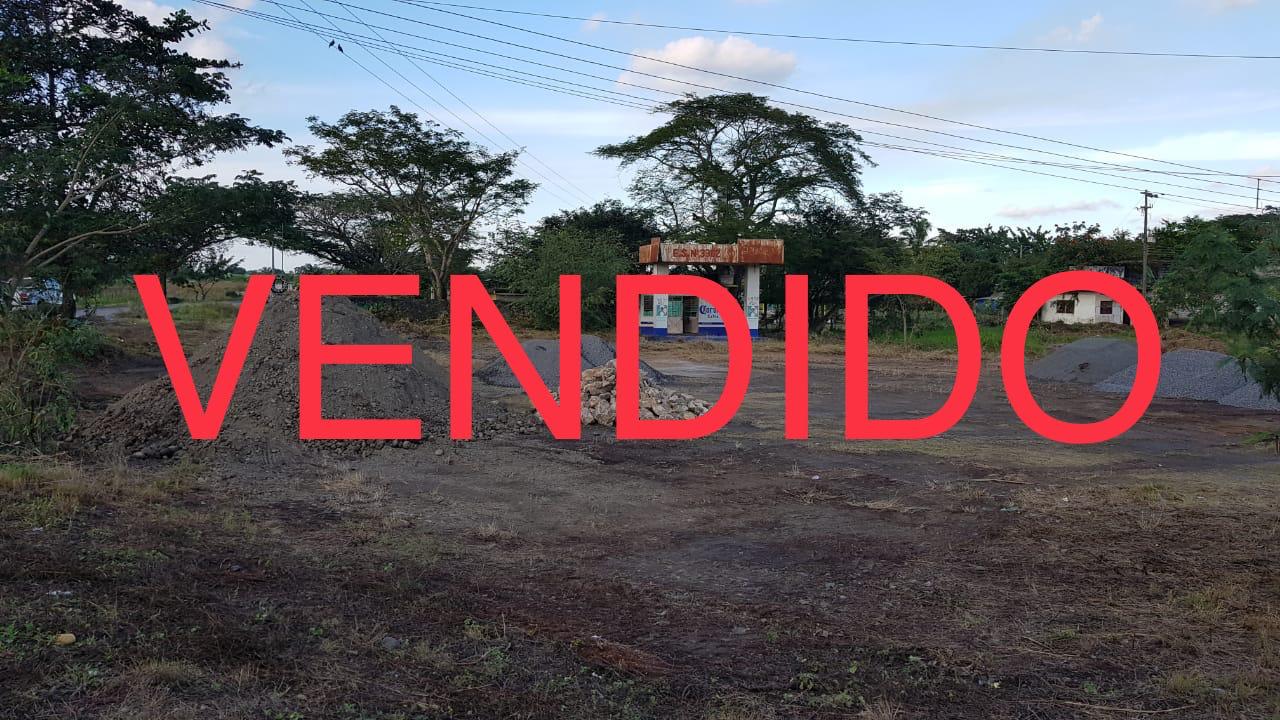
Only the third characteristic remained.
**Sole Proprietorship**
Since this topic is necessary to maintain the continuity of the ideas in this book, I keep it as expressed in the Mexican version. While the Simplified Stock Corporation (SAS) doesn’t exist as such in Msr, according to the artificial intelligence I rely on for these matters, Egypt does have individual companies, which would be the equivalent of what I present here.
From the basic information I get from technology, individual companies in Msr, like in Mexico, aim to reduce informal employment through simplified administrative processes, such as quick registration for new taxpayers, simplified tax filings, and preferential tax rates in the first year of operation.
Like the SAS in Mexico, they sound like a good option for those looking to start as entrepreneurs and join the formal economy, which ultimately sustains any country.
Curiously, in mid-2016, Mexico created the SAS, a legal entity that, among other features, is the only option allowing a company to be formed with a single partner (though it can have more if desired).
Other interesting features are that it can be opened with a capital of $1.00 peso ($2.46 Egyptian pounds), the partners’ liability is limited in case of issues, protecting your assets, and the entire process is online.
Once you’re registered with the Tax Administration Service (SAT) with your e-signature and a bank account, the process is very easy and straightforward.
In fact, their advertising claims SAS companies can be formed in 24 hours, which isn’t entirely true, as the approval of the company name took at least three days from the Ministry of Economy in 2016. Still, it’s very fast and cheap once everything is ready. In fact, it costs nothing—you can form your company for zero pesos in days.
Given that I must update this paragraph, I see that, as often happens in Mexico, some create obstacles. The application for company name approval now requires an in-person process, which likely slows things down, but it’s still worth it, I assure you.
The main limitation of the SAS is that annual income cannot exceed $7,400,000 pesos (about $400,000 USD) in 2025, a figure adjusted yearly for inflation. If you’re like me and fond of the sole proprietorship model, you’ll need to ensure your SAS doesn’t exceed this income. On the other hand, the goal is for your company to surpass this amount quickly, forcing you to move to a Corporation or another legal structure that suits you.
Otherwise, you can participate in other companies as long as you don’t have a dominant position in them.
I recommend SAS because my experience was fantastic. I have one of the first SAS companies created in Mexico, and I was even interviewed on the radio in Mexico City about it. When I went to get my business e-signature at the SAT, they informed me it was the first registered in Hidalgo.
I know this topic seems brief compared to others I’ve covered, but SAS companies are that simple—there’s not much more to add about their creation. Later, when addressing tax matters, I’ll talk a bit about filing taxes under this and other legal structures.
And so, I fulfill the third characteristic of my company:
– A company with a single partner. ✓
To close the idea of the company as an idea, I touch on one final crucial topic: choosing the name.
**The Name**
Once the business model and characteristics were decided, I needed a name that aligned with the entire concept. Names shouldn’t just encompass the company’s philosophy but also be direct, simple, and easy to remember.
In the process of finding a name for this new real estate company, I recall tossing around possibilities in my mind but not finding one that convinced me. While searching, I thought something like, “This is a real estate company where you want to sell people a piece of land where they’ll build their homes or businesses, where they’ll spend a big part of their lives, and it will mark them…” and so I rambled.
What I want to convey here is that as an entrepreneur, it’s important to push your imagination to the limit—to exaggeration, if you will. I’m truly convinced that if you offer a product to someone, you must consider its deeper implications, because you want to leave a mark on your client so they speak well of you and your product has an impact.
I’ve called my first client to ask if they could recommend me to someone considering buying from me, and fortunately, I’ve had good references. The person who invited me to give the lecture that inspired this book was involved in a difficult property sale process with many stakeholders, some of whom were significant detractors spreading a bad image of me. But the sale was completed in a way that distinguished me with that invitation, for which I’m very grateful.
Today, those plots have an impact. The first now hosts an event venue where people spend time with family, friends, and loved ones. The second is a sports complex where young people train in various disciplines, learning to compete and coexist while improving their skills.
Reflecting on all this, I realized that the pieces of land a real estate company sells are true vessels of emotions that people will hold in their memories. They’ll host their children’s birthday parties, parents will give away their daughters in marriage, the next national soccer player will train on its fields, and coaches will shape their teams with their teachings.
All this and more is what you must consider when nurturing your business idea, and it should be reflected in the name.
I remember the name came to me one day while driving, thinking about anything but my future company’s name. It was like a moment of revelation, and at the same time, I thought, “How didn’t I think of this before?”
*ELE POR ELE!*
Incredibly simple, because *ELE POR ELE* (LXL) in Spanish is the most basic formula in the real estate industry for measuring a plot’s area (side × side). Plus, it includes the initials of my family’s names, all with E and L. So, this simple name encapsulates not just the mathematical formula *area = side × side* but also the formulas *properties = family × memories*, *properties = clients × business*, *properties = assets × profits*.
Later, I realized it’s a really “catchy” name, as we say in Mexico.
For example, since it’s a tricky name to spell when requesting an invoice, I have it written down when I ask for one. But once people know it, it’s common for them to say, “ELE POR ELE, right?” when I request another invoice. The same happens in dealings related to showing properties. Sales agents or clients seem to easily associate the name ELE POR ELE, remembering it for appointments. Several have commented that they find the name “curious.”
So, it has magic.
I don’t know how to explain it, and it might seem trivial, but I insist on this because a well-considered name adds value to your concept, and details make the difference.
This simple, original name is capped with the slogan:
*“Your Area of Opportunity.”*
I’m convinced I sell areas that are opportunities within reach for those who want them. The concept of an area of opportunity also applies in the sense that people buy a property because they know there’s always room for improvement in life. A property holds their aspiration to achieve more. I think it’s worth insisting that a couple buys a house to improve their lifestyle, or an entrepreneur buys a commercial space to multiply their profits and lifestyle.
Today, I no longer see the ELE POR ELE brand just as a real estate company. It’s the name I use for various business initiatives, and in the near future, it will become a conglomerate, whether by encompassing different brands or continuing to offer various products across different industries under that same name.
**Conclusion**
Entrepreneurs are independent individuals, inclined toward innovation, who aspire to a fulfilling life where they can enjoy their passions without limitations. In their pursuit of a comfortable life, an idea is born in their minds, starting abstractly and building itself as imagination does its work.
That’s how a company is born—as an idea in constant evolution, a living entity that adapts to social changes and its creators’ dreams. Achieving this involves overcoming financial challenges, patience, creativity, and a clear vision.
Because, ultimately, a successful company doesn’t just generate income—it sells dreams, inspires, and leaves a lasting impact on society, consolidating itself as a reflection of the personality of its creator.
**What to Do Once the Company Is Open**
Unfortunately, I had to largely omit this chapter, as in its original version, it focuses heavily on tax matters, suggesting readers stay informed from the start—or even before opening—about strategies to maximize the company’s resources and, of course, it´s focused in mexican law, including a heavy criticism to our tax system.
Later, I’ll include a brief comment in the advice section based on experience, recommending studying, particularly tax deductions, which are surely covered in Msr´s law and make sure to do it with a critic eye, since this is going to prepare you avvoid future mistakes.
Find the topic in your tax law and dive into it to understand the opportunities the government offers to invest in your business, making the tax burden a tool for improvement.
If you’re new to entrepreneurship, governments often have incentives to help businesses take off, such as zero tax in the first year, depending on the country and criteria adopted. Research these incentives in Msr.
A quick AI review shows that the Msr government does offer special tax rates for new businesses, so study them before opening, as getting ahead will give you a huge advantage.
**I Said NO to Naguib Sawiris. Twice!**
In this section, I’ll share a couple of stories from my business ventures that taught me valuable lessons. I’ll use these lines to reaffirm the importance of nurturing ideas through imagination, emphasizing even more by inviting readers to take this practice to the point of obsession to generate business opportunities.
The first is recent, from a few months ago in 2025, though it began a year earlier, in April 2024, when I acquired the usage rights to a registered brand with a fascinating history in Mexico.
It’s a brand once used in Mexico by an iconic global hospitality company that, for some reason, became available for purchase. I was the one who had the chance to acquire it, knowing that not only the company I mentioned but at least two other individuals in Mexico were (and are) trying to reclaim it and I bought it intending to negotiate with interested parties or develop it myself if the conditions weren’t right.
So, in April 2024, I acquired it, and by September, it was duly registered. During the six months between the application and registration confirmation with the Mexican Institute of Industrial Property (IMPI), my curiosity led me to research the brand’s history beyond Mexico, and what happened was pleasantly surprising.
When I saw the brand in the United States, I was thrilled.
When I saw it in Hong Kong, my surprise grew.
By the time I reached India, it was clear that investing in the brand was a great decision.
But when I discovered what was happening with the brand in Msr and its future plans, I went crazy.
I was completely captivated by the sophistication with which the brand is being developed in the Middle East, Africa, and beyond, with its nerve center in Msr. So, I dove into everything related to its creators, to the point that my ideas of negotiating the brand in Mexico were nearly forgotten, and my interest in contacting its former owners vanished.
Focusing on the Egyptian alternative, I learned about a company called ORA Developers, dedicated to hospitality and housing developments with a not just modern but futuristic vision, transforming the real estate landscape in emerging nations. Thanks to my curiosity about this company, I soon learned that the mastermind behind it all is an entrepreneur named Naguib Sawiris, considered a pioneer in Egypt’s communications development and a true celebrity in Africa and the Middle East and the more I researched, the more my amazement grew.
I reviewed every article, interview, and page about Naguib Sawiris and just as with the opening of Ele Por Ele and whenever I focus intensely on something that interests me, I studied the brand and the person so thoroughly that it became almost an obsession.
One of the first things I decided to learn, driven by this growing passion, was the Arabic language, to communicate in the original language of the brand’s developers. This was out of respect and as a perfect excuse to learn a new language and I gave myself a year to advance in Arabic while continuing to gather information about ORA Developers and Naguib Sawiris, waiting long enough to secure the brand’s official registration in my name to make it marketable again.
Of these three goals, I never anticipated how challenging Arabic would be. I still feel like a beginner despite the hours I’ve dedicated, but since it’s become a passion and a challenge, I know I’ll eventually communicate with Arabic speakers, especially now that I plan to launch this book.
Along the way, I learned that Naguib Sawiris has not only leveraged his business genius in Africa and the Middle East but also challenged powers like Italy and France. I’m not exaggerating when I say these countries were shaken by what he achieved with his companies entering from outside.
I’m talking about the need for these nations to decide, at the level of their economy ministries and legislatures, to ask him to sell his stakes in the companies he grew, essentially because they became dominant players in an industry as critical as telecommunications. Though not stated in news reports, I intuit that the real issue was that, as a non-European from an emerging nation, their pride couldn’t tolerate his growth and access to such significant information. It was like an affront to their ego, ultimately resolved through diplomacy.
I must clarify that the above is just my perspective, not something I’ve seen in any opinion or article, and I take full responsibility for it.
And as if that weren’t enough, I learned that Sawiris is an opinion leader who practices social an political activism daily, an activity I also enjoy, though I’ve neglected it lately. But I’ll return to it, as emerging nations always need critical voices to challenge decisions about their vast resources.
This is how I became a true admirer of Naguib Sawiris’s work, philosophy, and brand development approach and thanks to the patience I discussed earlier, I spent a full year working on my strategy.
Thus, in January 2025, I saw Naguib Sawiris as the keynote speaker at a communications industry summit in Dubai, where he once again shared his views and captivated the audience with his charisma. From that interview I remember a part where he said his success largely comes from making quick decisions without overthinking, as time can work against you.
After watching that interview, I felt uneasy for missing the event, so I thought, “I can’t afford to let this information slip.”
From then on, I stayed highly alert to such events in the Middle East, which I had to follow personally, since being in Mexico meant I received no advertising about these conventions and that’s how I learned that, at the end of February, he’d be a keynote speaker again at an investment summit in Abu Dhabi, less than three weeks away.
I immediately checked the event’s website for tickets, but registration was not only closed, it was an invitation-only event, not open to the public.
So, there was no way to attend… in theory.
In theory, because I contacted the Mexican Embassy in the United Arabs Emirates, begging them to secure me tickets. But regardless of their response, I bought plane tickets and booked accommodation for myself and my wife, figuring I’d manage if the embassy didn’t come through.
I also consulted AI for ideas, and one was that many people attend such events hoping to beg for entry or even stay outside, just for a chance to contact key figures.
So, with plane tickets and hotel booked and the idea that I’d stay outside if necessary, I was determined to contact Naguib Sawiris by any means. If I didn’t find him at the Abu Dhabi conference, I’d visit his office in Dubai the next day.
But that wasn’t the case. Five days before the event, the embassy informed me that tickets would arrive via email, and I just needed to fill out the requested details.
I don’t know how to explain it, but I never doubted I’d be at the event. I was 100% certain, but you always need alternatives. No matter how sure your intuition is, you must have a Plan B, C, and D.
And february 26 arrived, the date of the Abu Dhabi conference.
My wife and I woke up early to arrive with time, as it was an hour-and-a-half drive from our hotel in Dubai. We’d been there two days early, thrilled because it was the perfect excuse to celebrate our 20th wedding anniversary in a city that captivates with its multiculturalism and business atmosphere. Our spirits were high.
We left at 7:00 a.m. to register before 9:00 a.m., when the event started, as Sawiris’s conference was one of the first.
Of course!
The organization had him as an anchor for the opening, though not at the very start to allow time for registration, but early enough to ensure everyone was awake and excited.
We attended two fascinating prior presentations about the UAE’s success, with incredible speakers and the recurring theme of quick decision-making for organizational progress. The UAE’s economy minister spoke of laws changing overnight, sometimes in hours, when they realized they weren’t working and could hinder progress. When they talk about speed, they mean it.
Finally, the third presentation arrived.
The atmosphere was charged; people eagerly awaited it. You could feel the admiration in the audience. The previous speakers were brilliant, articulate, and offered invaluable information, but this conference was not only brilliant—it was interactive. We laughed at Sawiris’s anecdotes about extortions he faced due to emerging nations’ policies, something those of us familiar with the whims of improvised leaders understand well.
Pure genius.
The audience gave a standing ovation at the end and while this was happening, I rushed to the exit to try to interact with him, but there were too many people crowded around, and he was accompanied by two people acting as some sort of bodyguards keeping everyone at a distance because otherwise it would have been a total chaos. You could see the disappointment on people’s faces who wouldn’t get to greet him or take a photo. But with a year-long plan, I wasn’t going to stand idly by. I followed him from a distance as he quickly headed to the exit. I thought he was leaving, with a car waiting to whisk him away, and I was already planning to visit his Dubai office the next day.
But no!
Instead, he was led to a lounge in the hotel’s reception, away from the conference bustle, where he sat to talk with someone for about ten minutes. You could see them, as it wasn’t closed off; you could’ve even walked by and greeted them if you were bold enough. I stayed a few meters away, watching the bodyguards, who were nearby but distracted, no longer focused on the conversation happening in the hall.
Suddenly, Sawiris stood and walked toward the exit, right where I’d been sitting, observing from afar. It was incredible—I just stood, extended my hand, and introduced myself:
– “Good morning, Engineer Sawiris. My name is Eduardo, from Silversands Mexico. I want to congratulate you on your brilliant conference…”
Before I could continue, with a surprised gesture, he asked:
+ “Silversands Mexico?”
– “Yes, that’s right. Last year, I bought the rights to the brand that coincidentally matches yours, and I came here to ask you to bring your version of Silversands to Mexico.”
+ “I’d love to!”
+ “I’ll need you to find a beachfront plot near an airport and please, I don´t want one of those saturated beaches you have in Mexico. I want a place where we can pave the way for a Silversands hotel and you send the information to the email on this card.”
Then, he handed me his business card.
I was in disbelief, thinking to myself, “This is what he means by quick decisions!”
It didn’t take him a second!
+ “Do you have your business card?”
It took me some moments to react.
– “I, I, I… don’t have one, but in this brochure you will find information about the business potential for the brand in Mexico and some beachfront plot options I’ve already researched. While some meet your specifications, I’ll look for alternatives.”
+ “Have you seen my Silversands hotel in Grenada?”
– “Not yet, but I plan to see your work firsthand, though I had to come find you first.”
+ “Great! Send me the information to the email, and I’ll respond when I can. We’ll meet later to discuss contracts and fees.”
– “Perfect! I’ll gather more information and get to work as soon as I return to Mexico to have it ready per your requirements.”
My comment about returning to Mexico seemed to trigger something in him, and before we parted, as to clarify our brief talk, he said:
+ “Wait. You said you came from Mexico just for this, right?”
– “Yes, yes, yes. My only goal in coming here was to meet you and discuss this in person.”
+ “Then let’s meet Friday at my office to discuss details.”
And there I was, with a proposal to meet and discuss business details with the living legend, as he’d been introduced at the conference. I don’t know how many attendees would’ve given anything for that opportunity, and I was getting it on a silver platter.
A year of research, studying Arabic, obsessing over every detail about him and his companies. A year of dreaming, pushing everything to the limit, using all my imagination to make things happen, and deciding that the best strategy was this trip with no certainty but immense confidence in everything I’d done to tell Naguib Sawiris in person how much I wanted to bring his Silversands to Mexico.
All the hours of study, nights and days daydreaming, ideas generated to get here—it all boiled down to this moment, and it turned out far better than I could’ve imagined.
And I said no!
He insisted.
I refused twice!
By the time I came back to my senses, I had neither the meeting nor the deal.
His final response was:
“Thank you for contacting me. For now, I have no plans to expand to Mexico.”
And that’s exactly how you ruin the chance to do business with the Middle East’s business titan.
But this isn’t the first nor the last business experience worth sharing.
Learning never stops, so I’ll continue with my second anecdote, which actually happened earlier, in 2019.
By then, I’d long been dreaming of a plot, having acquired the first three properties to found Ele Por Ele, with two doing very well. I began dreaming of a fourth property with specific characteristics: it had to be at least 40,000 m² and up to 200,000 m², rustic, on the city’s outskirts but not too far to attract people to my go-kart track, and eventually eligible for approval by the Mexican Motorsport Federation for national and international competitions.
And it had to be very cheap.
As karting competitions went by, I fueled my dream more and more. I became obsessed with that plot, just as I’d been with opening Ele Por Ele and later with the Sawiris deal. Nothing would stop me.
My desire and obsession were so strong that one day, browsing auction properties, I found exactly what I was looking for and on September 11, 2019, I was the highest bidder for an 80,000 m² flat plot in San Agustín Tlaxiaca, a small town 15 to 20 minutes from Pachuca, my hometown, at a bargain price, perfect for attracting motorsport enthusiasts.
Practically tailor-made, I could hardly find anything more ideal for the dream I’d been nurturing for a year and a half. By January 2020, it was duly registered to Ele Por Ele and during the months between the purchase and registration, I had time to reconsider and realized that buying the plot was one thing, but building and maintaining a track as a lifelong business was another. I also considered that other racing categories might pull us away from karting. So, my plan shifted from building a go-kart track to selling the plot. And as I explained earlier about my passion for sports and watching my children grow in them, my entrepreneurial dreamer’s mind changed plans to build a gym on a plot I own, perfect for my daughters to develop their gymnastics skills under my vision and facilities. A gym requires fewer resources than a karting track, and in gymnastics, you can train in one place without needing to change every two or three years, as in motorsport.
In early 2020, Mexico enjoyed a good economic situation, with optimism and momentum. I quickly had interested buyers, but no one committed, as properties that size had relatively limited demand. Nevertheless, I knew the sale would come soon, enabling the gym and other pending projects. But on February 27, the government declared the COVID-19 emergency, which we thought would last a couple of weeks but turned into months and even years. In Mexican schools, in-person classes didn’t resume until 2023, though most activities had restarted by mid-2021, with devastating consequences for businesses, many of which closed permanently after a year and a half of uncertainty.
For real estate, the COVID-19 emergency was especially brutal. The optimism turned into a scenario where many stopped investing as the lockdown extended, needing to plan resources at least medium-term. For many businesses, it became about survival, not profit.
But as always, I got obsessed and kept offering the property through every possible channel. With my mind fully focused on the sale, I thought I could close it in May for my son’s birthday. When that didn’t happen, I aimed for June for my wife’s birthday, then mine, but nothing.
I mention this quickly in a few lines, but when I talk about setting these dates as goals, I mean the obsession I keep emphasizing. It’s hard to explain—a state of being where you focus entirely on the goal. You think, dream, and nurture that single purpose, and deep down, you know it’ll happen.
At some point, my wife mentioned the plot to a family acquaintance in real estate, who said he might have an interested buyer and he actually didn’t take long to follow up.
On Tuesday, July 7, he called to meet at his house and present an offer for the plot.
I remember receiving it with the same surreal feeling I had when Naguib Sawiris said he loved the idea of a Silversands Mexico. The offer was very good and in cash. In that moment, I felt like I was floating on clouds—the realization of a dream, an obsession fulfilled exactly as I’d visualized.
And that wasn’t even the best part! The best was when he told me something like:
“If you give me an answer by Thursday, we’d be signing the deed on Monday at this notary.”
We’re talking about Monday, July 13, 2020. I know this exactly because that day we were celebrating my daughter’s birthday, and it’s also the same date I registered the name Ele Por Ele with the Mexican Institute of Industrial Property. In fact, I can almost say my daughter and the company share the same birthday.
And there I was, receiving this fantastic offer in the middle of the pandemic, when everything was at a standstill and practically no one would spend money on real estate, on a date that couldn’t have been more special.
Two years of dreaming about finding the land, imagining and reimagining the possibilities, searching for opportunities everywhere, talking to potential clients, not losing faith despite being in the midst of one of the most unexpected periods the world has ever faced, and as the cherry on top, picturing how I’d arrive at my daughter’s birthday on July 13 with my pockets full thanks to this magnificent sale.
And I said no!
He insisted.
I refused twice!
That’s right!
Believe it or not, that’s what happened.
Remember when I said in the introduction that you’d stumble over the same stone multiple times?
Well, consider these two anecdotes as proof of that statement taken to the absurd.
– ‘But why did you say no?’
The students and attendees at the lecture asked me, their faces a mix of surprise, disbelief, and even indignation.
And the answer was simple.
– ‘Because I was foolish.’
Ambition can lead you to make a mistake as big as turning down the local magnate for the sale of a highly coveted piece of land. When I spoke with the sale promoter his exact words were:
+ You don’t have to give me an answer right now. Think about it, and if you respond by Thursday, we’d be signing on Monday at this notary.
I told him I’d think about it just to pretend, but in my mind, the sale was already done.
BUT, I suppose it was on Wednesday when I got a call from someone I’d heard about, saying he was investing in real estate at the time.
+ ‘Good afternoon, Eduardo, I’m… and I’m calling because I got information about the land you have for sale, and I want to tell you I have the following offer… Are you interested?’
The offer was 5% higher than the one I’d received, also in cash.
– ‘Yes, of course I’m interested.’
+ ‘Great, I’d just ask that we go see the land in person on Monday and finalize the agreement.’
– ‘Perfect, see you on Monday.’
And the long-awaited Monday arrived—my company’s birthday, my daughter’s birthday—and with the expectation of closing the deal, I went to the appointment. We saw the land, he asked a few questions, made one or two comments, and concluded:
+ ‘Well, I like the land. Just let me verify the information on my own to ensure everything is in order, and we’ll follow up to close the deal.’
Since I was 100% confident in what I was offering, I thought, ‘The only difference is that the deed won’t be signed on July 13, but oh well’:
– ‘Perfect, I’ll wait to hear from you.’
A few days later, the promoter of the first offer called to say I hadn’t followed up, which he found odd. Feeling overly confident, with my big ego bursting off my chest I told him:
– ‘Guess what? I got another offer, and that’s why I haven’t reached out.’
+ ‘Well, our offer still stands for signing, but don’t take too long, or my client might back out.’
Two weeks passed without a response from the second offer, and by the time I contacted the first promoter to say I was ready to proceed:
+ ‘Guess what? It’s no longer available. My client had an unexpected issue and spent the funds allocated for the land purchase.’
And that’s how you ruin a sale to the most important local entrepreneur, who, by the way, later made it very clear to me that he calls the shots in his area.
I ended up selling that land in 2023, not without first falling victim to a scam, and at a price 30% lower than the first offer I received, with post-pandemic inflation further reducing the value of the 2020 offer.
In December 2021, a ‘client’ came along, and I signed a dream contract for the sale of the land, for an amount 50% higher than the first offer I’d had, that I thought “It was worht the wait”. The contract included a clause stating payments would begin at the end of January 2025, after fencing the land with cyclone mesh to secure possession, with both of us splitting the cost. I saw no issue with this because the city was full of advertisements featuring his company’s logo, and not only that, he was a sponsor for a few months of the city’s soccer team, which is somewhat famous and put Pachuca on the map. Soccer fans in Msr may know it, as it has played in a Club World Cup against Al Ahly at some point. So, I contributed money, and he immediately started working on the land. But at some point, he told me a group of people stopped him, claiming the land belonged to the community.
Two days later, I got another call from my acquaintance, the promoter, saying they were repeating the 2020 offer, for immediate signing the next day if I wanted.
– ‘Under other circumstances, I wouldn’t repeat the mistake I made three years ago,’ I told him, ‘but I have a signed contract that doesn’t allow it.’
I was tied up. On one hand, a contract obligated me to wait at least six months for it to lapse if conditions weren’t met; on the other, the local entrepreneur made it clear he’d buy the land when he decided, on his terms, and I failed to understand that at the time.
The dream contract turned out to be a scam. As I followed up on this client, signs of dishonesty emerged. Though I spoke with him by phone, the calls were only to stall, assuring me that if he didn’t buy the land, he’d find a buyer and charge a commission, while already presenting himself as the new owner. So, I went to confront him at his business, where we’d signed the contract, only to find it had been transferred to someone else. Then I went to his house in an upper-middle-class neighborhood where we’d first discussed price and conditions, only to learn he was no longer there. It was as if he’d vanished overnight. To top it off, I received information about someone from Querétaro (a city 150 km from Pachuca) looking for him for fraud in a home sale, and they weren’t the only one—there were at least two others in Querétaro seeking him.
They even contacted me:
+ ‘If you’re in Pachuca, you can look for him at these addresses.’
– ‘I went to both places, and he’s not there anymore.’
Piecing it together, I realized the money he got from the Querétaro scams was used to relocate to Pachuca, flood the city with his advertising, and even appear as a sponsor on the professional soccer team’s shorts to convince people of his company’s importance.
In this case, I was deceived with the advance payment for fencing my land, which hurt—yes, for the money, but more for my pride and because it cost me a sale. Still, it’s nothing compared to the frauds in Querétaro, and I don’t know if they ever caught the scammer.
In the end, I sold the land to the municipality at a relatively modest price, and today it hosts a sports complex.
The purchase decision fell to the person who made the first offer, no longer as a private individual but as a public representative, and honestly, he earned my full respect because he taught me a great lesson.
What comforts me from this experience is that the land ended up with the best possible client, serving a social purpose by fostering youth development.
Back to Naguib Sawiris…
To wrap up the case with Engineer Naguib Sawiris, I pick up our conversation where I left off.
+ ‘Let’s meet Friday at my office to discuss details.’ (It was Wednesday.)
– ‘Friday’s tough for me. Can it be tomorrow?’
+ ‘No, I can’t tomorrow. I’ll be busy all day.’
– ‘No problem, whatever time you say, early or late, I’ll meet you wherever you want.’
+ ‘No, really, I can’t tomorrow, but we’ll meet Friday.’
– ‘The thing is, I have my return flight on Friday.’
+ ‘What time’s your flight? If you want, we can meet very early so you have time.’
– ‘I have to be at the Abu Dhabi airport by 5:00 a.m. at the latest because my flight’s at 7:00 a.m.’
I think after my second refusal, he gave up on my foolishness and said:
+ ‘Well, you have my contact info. Send me the information, and I’ll reply when I can.’
And that’s how I let Naguib Sawiris slip away.
In my defense (if there´s any), this exchange happened in a span of two minutes at most. It was incredibly fast, and I was so stunned by his response that I couldn’t think clearly.
It “caught me off guard,” as we say colloquially.
The next day, when I went to his office in Dubai to speak with his personal assistant and explain the encounter I’d had with her boss the previous day, saying I was there to tell her I’d changed my return flight and could meet him on Friday, her response was:
+ ‘Sorry, Mr. Eduardo, but I just spoke with Mr. Sawiris, and his plans have changed. He’s at the airport leaving the country right now and won’t be able to meet you this time.’
I returned to Mexico, gathered the information, sent it to the contacts he provided, and after a reasonable time with no yes or no, I decided to go find him again.
On May 4, I showed up at his office in Cairo and spoke by phone from the reception with his assistant.
– ‘Good morning. In February, I met with Engineer Naguib Sawiris to present an investment proposal for Mexico, and he asked me to send information, which I’ve done. I’m here to reiterate my interest and see if he liked the proposals I sent.’
+ ‘Very well, Mr. Eduardo, give me a few minutes to reach out to him, and I’ll get back to you with a response.’
Ten minutes later, I spoke with the assistant again:
+ ‘Mr. Eduardo, I spoke with my boss, and he says he greatly appreciates your interest, but for now, he has no plans to expand to Mexico. He also says he’d love to meet you, but his schedule is very busy these days. Please leave your contact details and let me know how long you’ll be here, and he’ll try to make time for a meeting if possible.’
I left my details, but the meeting never happened. From news and social media, I saw he was indeed extremely busy those days. He’s someone operating on another level. He came and went from Egypt during the five days I was there—no way he could fit me in.
But the incredible thing is that, despite his constant travel between countries, I did see him during my trip.
I was in Cairo those days because there was a concert where Engineer Sawiris had announced his presence, and I’d already bought my ticket. But the night before, his social media showed him inaugurating his Madinat Al-Ward project in Iraq, and I thought, ‘He probably won’t be here tomorrow.’
But he was, surrounded by press and friends, and I was just meters away—maybe three meters from him.
I could’ve been bold and greeted him, maybe even spoken briefly, but he’d already given me an answer, and I felt the place and moment weren’t right, so I just remained a concert attendee.
To put my plan during my Cairo visit in context, I arrived on Sunday and was set to return Thursday night, meaning I was in Cairo the entire workweek, confident that Naguib Sawiris would be in the country, so my plan couldn’t fail, right?
Well, that Sunday, he appeared on the news at a charity event in the afternoon. Monday, he likely traveled early, as his social media showed him in Iraq that night, inaugurating his Madinat Al-Ward project. Tuesday morning, he was seen approving the project’s offices. I thought he might not be in Cairo after all, but the next day, Wednesday night, I saw him at the opera concert.
It never crossed my mind that someone could have such a schedule, but it’s Naguib Sawiris, and I had no idea something like that could happen.
Of course, I wonder what I could’ve done differently, and there are many things I considered but didn’t act on, like notifying in advance of my Cairo visit and requesting a meeting. But I always wanted to add drama to my trips to find Naguib Sawiris, with an element of surprise.
There were also other actions that only occurred to me afterward, and I don’t know how I didn’t think of them earlier or even in the moment.
Obviously, saying yes immediately in Abu Dhabi to his proposal to meet was what should’ve happened first, but since it didn’t, here’s something I can’t understand why I didn’t consider:
Why did I wait until the next day to go to his Dubai office to request a meeting when I could’ve gone right after the conference?
It was 11:00 a.m. when his conference ended—maybe I would’ve found him there if I’d acted immediately.
Why was I so insistent that the meeting be on Thursday when I could’ve suggested meeting later that same day?
He said he’d be busy the next day, but he didn’t mention being busy that same day.
Oh well.
The point is, I let the opportunity slip due to a lack of mental agility.
And so, I close this chapter with two anecdotes about how NOT to act in business. Though my doubts led me to waste a couple of great opportunities, I still consider them very valuable because they taught me lessons that will surely work in my favor in the future.
Here are some that come to mind:
1. **Business happens in the moment.**
When the opportunity comes, don’t hesitate, don’t let your ambition or indecision sabotage you. When I say business happens in the moment, I mean making quick decisions Naguib Sawiris-style—in a second—because if you think too long, the opportunity slips away.
2. **Push your mind to the limit.**
You must desire what you want with your whole mind and body, without fear of taking it to the point of obsession. That’s how opportunities arise—it’s up to you to seize them.
3. **Take risks.**
When there’s uncertainty, the only way to clear doubt is to act and let what happens, happen.
4. **Alternatives.**
If the original plan fails, ensure you have multiple alternatives ready. If you still fail, the experience from failure will become maturity.
5. **Business trips don’t have a return ticket.**
I suppose many people who travel to close deals know this, but it wasn’t something I was aware of. Unfortunately, I didn’t consider it in either of my two Middle East trips, but next time, I’ll make sure to book only a one-way ticket.
There are surely more lessons I could draw from these anecdotes, but these are the ones I find relevant for this story. Beyond continuing with my conclusions, I invite you to leave a message and share your experiences and opinions about what I’ve said here, as that’s how learning is enriched.
—
**Advice Based on Experience**
Below, I present a series of simple tips I consider important to keep in mind when you decide to become an entrepreneur.
**Maintain Liquidity**
Having cash on hand is crucial, as the best opportunities arise when you can offer payment in a single transaction, especially in areas like real estate where product prices tend to be high.
As I mentioned earlier, property prices are often sky-high, but they’re illusory, as what people are willing to accept in reality is far from what real estate agencies or brokers make them believe when you present a quick, serious offer.
It’s happened to me several times: I present an offer, it’s rejected, and later they call to ask if I’m still interested. People face reality and realize it’s an inflated market with prices that don’t reflect the economic reality we live in.
So, maintain liquidity—that’s my advice.
I say this not just from experience but from living it, as I’m currently going through a tough stage due to a lack of liquidity. At times, you can focus too much on investments and neglect cash flow, so it’s critical to balance both.
It can be frustrating to have assets tied up due to a lack of liquidity to invest in them, like a piece of land with pending projects. How do you start if you don’t have the means at the moment? Worse, those lands stop being assets and become liabilities, as you still have to pay fees to maintain them.
And don’t get me started on the opportunities you miss without cash ready. I’ve let countless deals slip through my fingers, though I’ve also seized opportunities by having liquidity.
**Rent Is the Obstacle to Business**
As I mentioned before, the real estate market often has prices beyond the real purchasing power of the population, and rents are no exception. Paying rent for a commercial space means diverting resources to sustaining the business that could be used for growth, so it’s not advisable to start a business requiring a physical location if you’re a new entrepreneur.
In short, don’t pay rent if you’re not established. Don’t let vanity slow your start. Often, out of pride, we want to open a beautiful, professional space that makes an impact, but without the certainty that the business will work—it’s simply not wise. Rent is feasible once you have a known, proven concept, but before that, there are alternatives.
**Start Online**
Since the pandemic, online commerce has done nothing but grow, and projections indicate it will continue for a long time, so logic suggests that starting online is the most practical approach today.
Working online not only saves on renting a commercial space but also allows you to test your venture before launching it to the market. Creating business pages on social media is free, and you can run an entire advertising campaign for your idea to gauge its potential before investing heavily. This is especially useful for those unsure about the type of business they want to start. Electronically, you can research the market by visiting pages similar to your business idea to see their follower count and opinions about their product or service, not just in Egypt but worldwide. You might even find initiatives that don’t exist in your country and feel inspired to launch something similar in Egypt—why not?
Online, you can also create a pre-launch campaign without opening the business. If the response isn’t what you expect, you move to a new idea. In other words, before investing in a product or service, you can invest in very affordable advertising. With little money, you reach thousands of people in your area or beyond and determine if your offer will succeed. If it’s positive, you can invest in your first catalog and start selling, risking much less. If it doesn’t work, repeat the formula until you find the opportunity you’re looking for.
With information technology, commerce has become truly easy and inexpensive. You no longer need to make large expenditures if you have some creativity and know-how with tech tools. Artificial intelligence will provide information on anything you can imagine, acting as an advisor, designer, or even confidant if needed. So, now it’s possible to risk capital only when your idea has a high probability of success.
For example, Ele Por Ele is a company without an office, as clients want to see properties in person, and I’ve never seen the need to invest in facilities I don’t require.
All preliminary work is done online.
Today, Ele Por Ele has a portfolio of 7 properties. Three of them with porjects in progress and the rest are for sale.
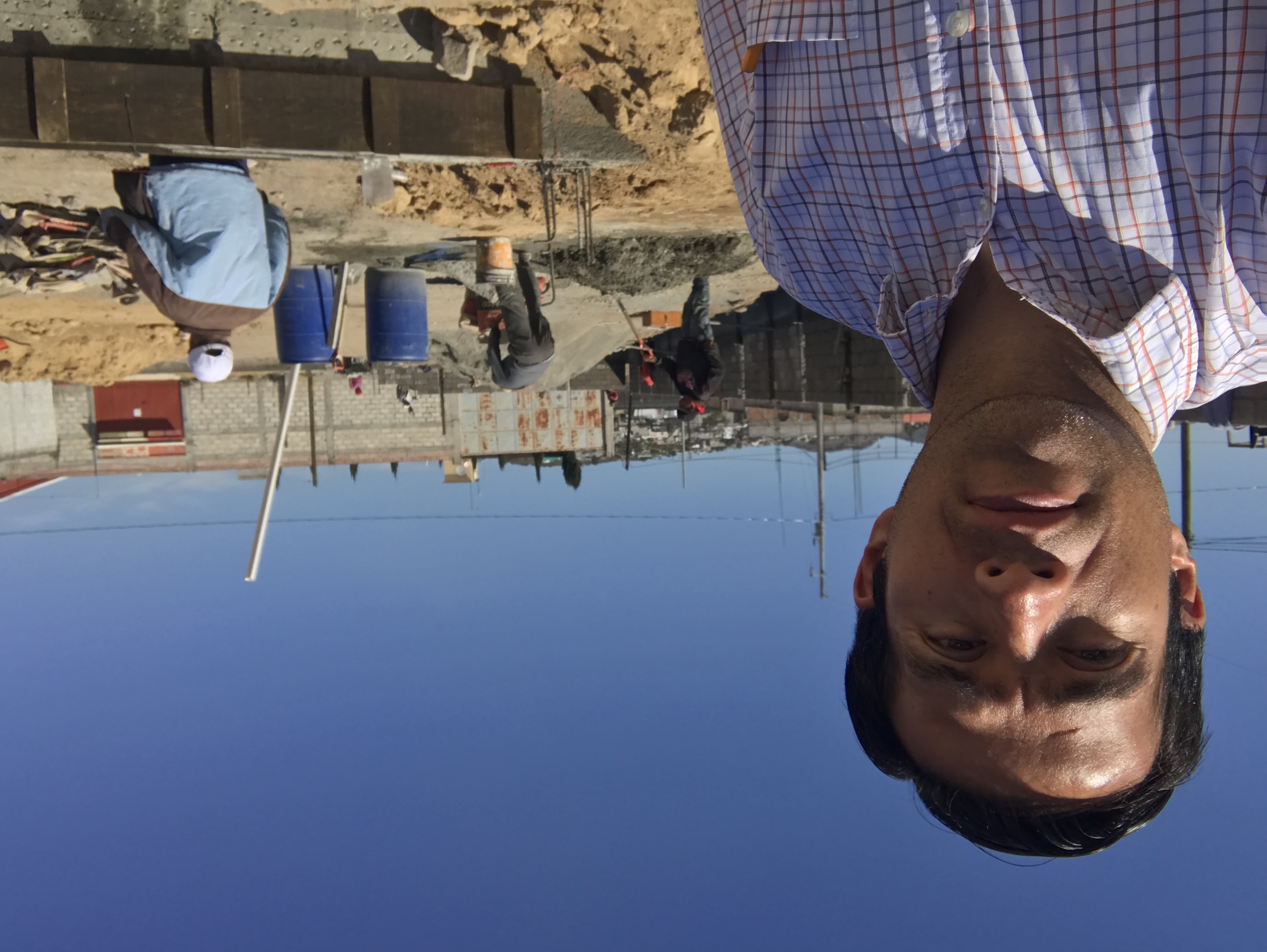
**Study Tax Matters**
In the Mexican version, this topic is quite extensive, and unfortunately, I can’t elaborate as much in the Egyptian version for obvious reasons, but I didn’t want to omit it entirely and keep it as a comment for you to consider in your next business in Egypt.
I mentioned this earlier in the section on starting a company, but it’s worth repeating: I strongly recommend studying your national tax law. I’ve done this by starting from the first article to understand the basics, and eventually, the law will guide you to topics related to your business type. You can focus on those relevant to your interests, skipping many that don’t apply, saving you from wading through extensive text, as national tax laws are massive.
Do it before reality forces you to. I only studied this after bad experiences with tax authority requirements, trusting someone else to handle the accounts. It’s infuriating to pay taxes and penalties for delegating such critical work entirely to someone else. It’s best to stay informed to avoid surprises and seek recommended accountants. Today, social media can show you tax filing firms and their credibility based on reviews.
Always talk to your accountant to understand the moves they’ll make and stay informed. It’s also a way to show you’re interested and knowledgeable. You don’t need to become an expert, but knowing enough sends a message that you’re serious, encouraging them to put more effort into their work.
Knowing a client is informed is always pressure for someone handling something as critical as tax filings.
**Study Everything Else**
Study anything that interests you and take it seriously, as it gives you an edge in any business-related activity and in life. It’s important to always have a book in progress. I say this because, with the internet and all its information and distractions, it’s easy to lose sight of books.
Studying and reading will give you an advantage over others, and I can’t explain it fully, but if you commit to being informed, life will show you it’s worth it. It’s a sense of confidence knowing you step out with a knowledge base you can use when needed.
In these times, studying technology is crucial. Knowing how to use tools like artificial intelligence and data repositories provides significant professional advantages, not just to stay current but to get ahead of what’s coming.
For example, since I mentioned starting online, AI can provide fascinating data about business models in your area. You can ask if it’s a good idea to start a specific business in your city, and you’ll be surprised by the level of detail it offers, including statistics, tables, and charts demonstrating a venture’s viability wherever you are.
They say the best investment is in yourself, and there’s nothing better than self-improvement.
**Study Languages, Especially**
English is not optional. I don’t know if it’s the same in Egypt as in Mexico, where, despite studying English our whole lives and being neighbors with the U.S., most people never took an interest in learning the world’s most important language—whether we like it or not. So, if you’re among those who stopped learning English because classes bored you or it didn’t seem relevant living in Egypt, change your mindset. Take what you’ve learned and start speaking it as soon as possible, as it’s the language of business. Not knowing it makes you somewhat illiterate when accessing the most up-to-date content in any field.
English, Mandarin Chinese, Hindi, Spanish, Arabic, French—in that order—are the world’s most spoken languages. So, if you already speak Arabic, you’re mastering the fifth most spoken language globally, and if you also master English, you have significant communication skills. As I mentioned, I enjoy learning languages and can confirm Arabic is by far the hardest. I’m not alone in this—many online sources agree. So, being an Arabic speaker gives you an edge, as growing up with such a language likely makes learning others easier.
The statistic above reflects languages by the number of speakers, but considering geographic spread, Arabic could rival Chinese and Hindi. Though those are vast territories, their expansion doesn’t match Arabic’s.
**Travel**
See the world and compare.
A long time ago, I heard the English were arrogant and cold, but after visiting London, I can say Londoners are some of the most attentive people imaginable. If you stop them on the street as a tourist to ask for directions, they’ll pause and explain in detail, taking their time until they’re sure you understand, then continue their brisk pace to work or wherever they’re going. Some even walk you to your destination if it’s on their way.
It’s not made up—it’s an experience I lived.
Then there are the Italians, always cheerful and elegant.
I lived two years in Firenze, giving me a deeper look into their culture. They’re joyful, friendly, and I love their sense of aesthetics, which is why they’re leaders in all kinds of design. Italians make aesthetics central to their identity, not just in clothing, furniture, or cars, but they can design an engine or industrial machine that’s not only functional but beautiful. I heard them say it bothers them to see tourists dressed sloppily. An Italian will tell you to present yourself well when traveling and show others who you are. I’ve applied this ever since.
During my two years in Firenze, I heard someone call it an old village with nothing to do, when it’s actually a youthful city. Every year, hundreds of thousands of students from around the world go to this historic city to train in fine arts. In your twenties, a night in Firenze is never dull, with people from all over going to bars and restaurants, always open to meeting new people.
On the topic of cities, Bruges is the Firenze of Belgium, a university city with architecture like something out of a medieval fairy tale, still preserving its defensive walls.
It’s worth visiting as a couple, strolling its streets, and taking a canal tour.
New York, Amsterdam, Buenos Aires, Rio de Janeiro—each has its charm.
All major cities are interesting, but one that, while not the most beautiful, impacted me the most is Berlin. The Germans have left messages throughout the city to remember the atrocities of World War II. You see structures with their lower halves bearing 1940s shrapnel marks, while the upper halves are rebuilt with modern materials, sending a powerful message: ‘We’re a country that rose from a great mistake, and let’s not forget the past to avoid repeating it.’ I later learned many Germans don’t know their national anthem or see their flag as a significant symbol, simply because they don’t find it important to exalt them due to this dark chapter in their history.
And, of course, I can’t leave out Mexico.
We’re famous for our beaches, with Cancún as the most internationally renowned—a turquoise paradise with sand like talcum powder. Then there’s Los Cabos in the north, equally famous for whale watching or swimming with sea lions at Isla Espíritu Santo. Both are paradises, just two of our stunning beaches.
Puerto Vallarta, Veracruz, Yucatán, Huatulco, Acapulco…
And, of course, Mexico City, the capital. A place blending tradition and modernity, you mustn’t miss Paseo de la Reforma, the main avenue in the heart of the city. Here, you can visit major museums like the Anthropology and History Museum or Chapultepec Castle, then continue to admire modern skyscrapers, with gardens lining the sides that make walking a pleasure. Keep going to reach the historic center, alive with the bustle of commercial activity and daily work.
Mexico City is a mosaic of everything you could want—art, culture, cuisine, fun, history, modernity. You find it all there.
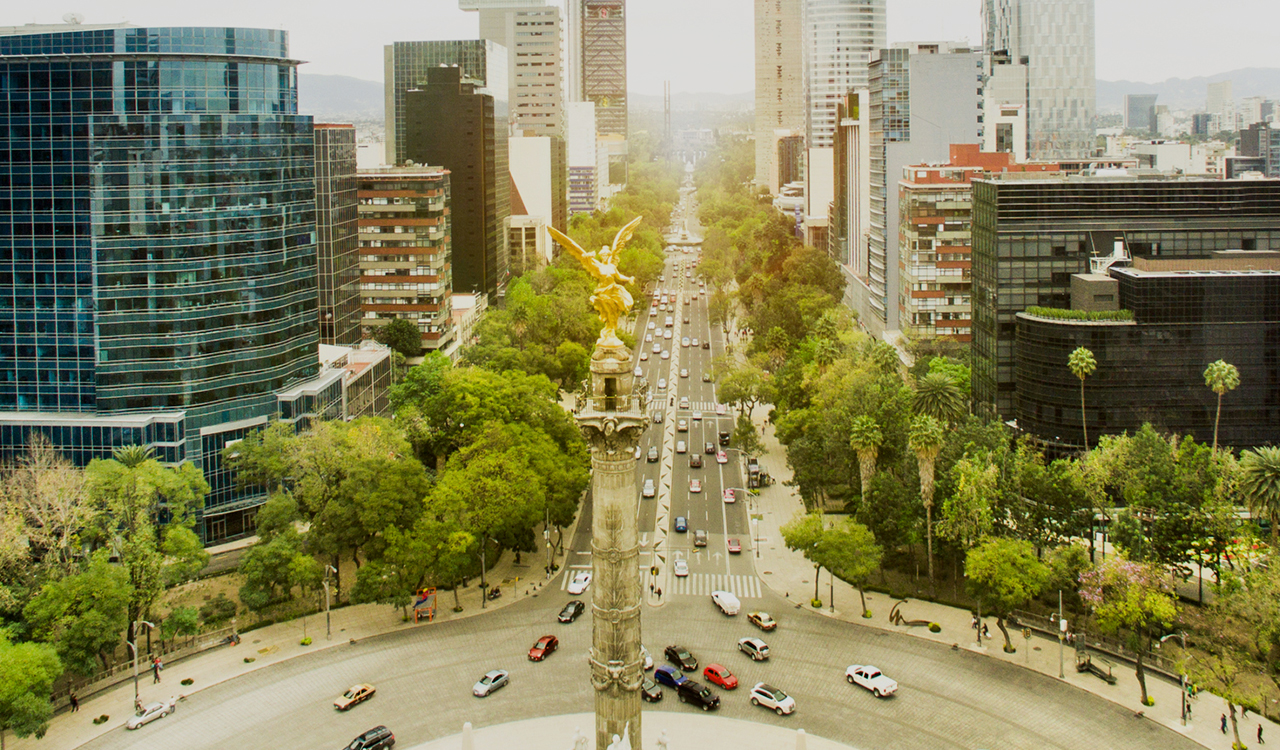
**My Visit to Msr (Cairo)**
When I started studying Arabic, one of the first things that caught my attention was that what I have known all my life as Egypt doesn´t have an exact equivalent in an arabic alphabet. For instance, the arabic alphabet doesn´t even have exact letters for what we know as “P” and “E” and then I learnt that the name you use for your country is Msr. I found it curious at first and asked my Arabic teacher, who explained that Msr is much older than Egypt. I found this enlightening, because, yes, it sounds more historical and I also think Msr sounds much more powerful.
I can’t explain it exactly, but Msr captures so much more of what the country means to the history of humankind, which is why, from the first moment I use it to refer to what I’ve known as Egypt. I will keep on calling it as Msr.
On April 17, I decided it was time to travel to Cairo. It was already a year since April 2024 and my due date had arrived and with it, the time to act and get a final word on the dream I had constructed , and since I’d considered since the beginning visiting ORA Developers’ projects, I knew the best place to do so was Msr.
I thought the best dates would be during the workweek of May 4–8, as Engineer Naguib Sawiris had announced his presence at a concert at the Cairo Opera on May 7, featuring his brother playing the piano and with the revenues for the benefit of the brave people of the Gaza Strip.
Since he’s constantly traveling, it was crucial for me to ensure a high chance he’d be in Msr during those days, and with luck, I could speak with him and so I bought my ticket. However, as I mentioned in the introduction, things didn’t go as planned. On April 22, I received an email stating that Mexico wasn’t in ORA Developers’ immediate expansion plans, and thus, ending my year-long dream in advance.
It was very sad but also liberating. While obsessing over something is thrilling and fills your head with all these dreams and ideas, it also causes insomnia and anxiety, which, though energizing, also brings stress.
But while my main reason for traveling to Cairo was to personally reiterate my interest in bringing a Silversands development to Mexico, it wasn’t my only reason. As a travel enthusiast, I was also excited to experience firsthand the evidence of civilization’s origins, forming my own opinion, because, as I’ve always said, no one sees things the way you do yourself.
So, on the night of May 2, I boarded a plane in Mexico, with a layover in Paris, with itinerary arriving in Cairo on May 4 at 1:30 a.m., planning to visit ORA’s offices around 10:00 a.m. By my calculations, if the plane arrived on time, I’d reach my hotel in central Cairo between 2:00 and 3:00 a.m.
**Sunday, May 4**
The plane arrived on time, but my luggage was lost in Paris. They informed me it had been checked for the Mexico-Paris leg but not Paris-Cairo, so I ended up at the hotel at downtown Cairo around 5:00 a.m. after filing a lost luggage claim and waiting in line with others who had the same issue.
After this delay and with no baggage, I went to sleep hoping to find a store open early to buy clothes to look presentable for my visit to ORA’s offices.
And this was the first thing I loved about Cairo. In Mexico, I’d never find a clothing store open at 9:00 a.m., but since I could, my plans stayed on track. I arrived at Nile City Towers around 10:00 a.m., after enjoying a delicious, spicy koshary breakfast to wake me up before the visit.
At the offices, I received the response I described earlier and then headed to the hotel I’d booked near the Grand Egyptian Museum. It was early when I arrived, as announcing myself at ORA took no more than 15 minutes, so I was at the hotel before noon. I dropped off my bags and walked to the museum, which was very close.
This is when I learned the second thing I loved about Cairo. It took me a bit to trust the drivers, but locals taught me to cross four-lane avenues “Msryian-style.” In Mexico, crossing such a wide avenue in traffic, dodging cars, is unthinkable, but in Cairo, it’s normal, and I got used to it soon (I had to).
So, I arrived at the Grand Msr Museum with its wide plaza welcoming visitors and an imposing facade, which is a modern interpretation of the ancient civilization’s grandeur.
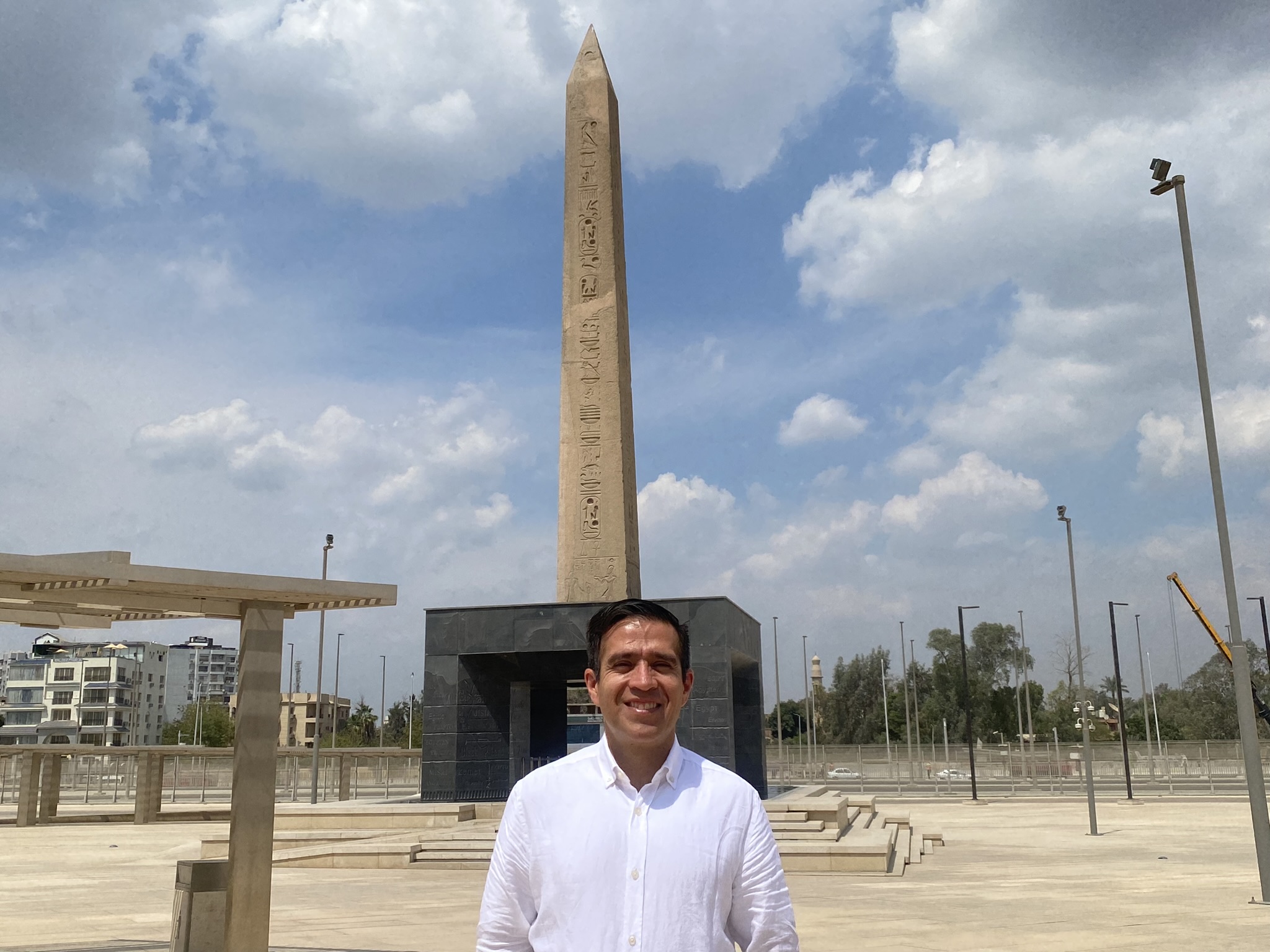
Once inside, you’re greeted by the grand statue of Ramses II in the lobby, aware it’s just one of many statues, with the truly massive ones likely awaiting the grand opening. Still, you can’t help but marvel at how, five thousand years ago, they managed to transport and carve such pieces.
I visited various halls, but the piece that struck me most was on the staircase leading to the tour through ancient Msr’s stages. It’s a stone about four meters tall with inscriptions of instructions from a ruler to builders. Though I’d seen such pieces in photos, seeing it up close (you can almost touch it) was enlightening. I could appreciate the precision of the edges of the figures forming ancient Msr’s writing—simply impressive.
What tools and hands were capable of carving stone like that?
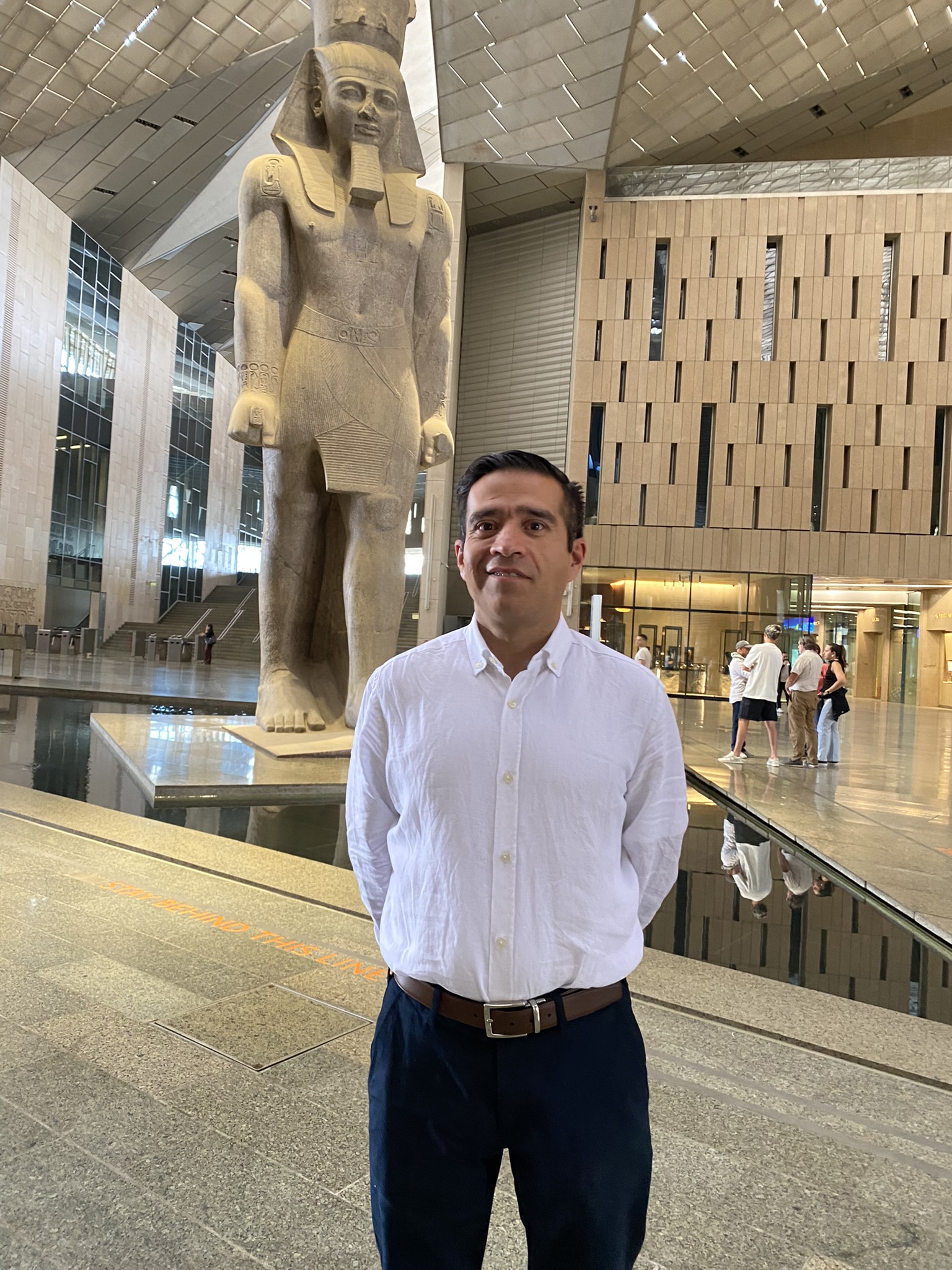
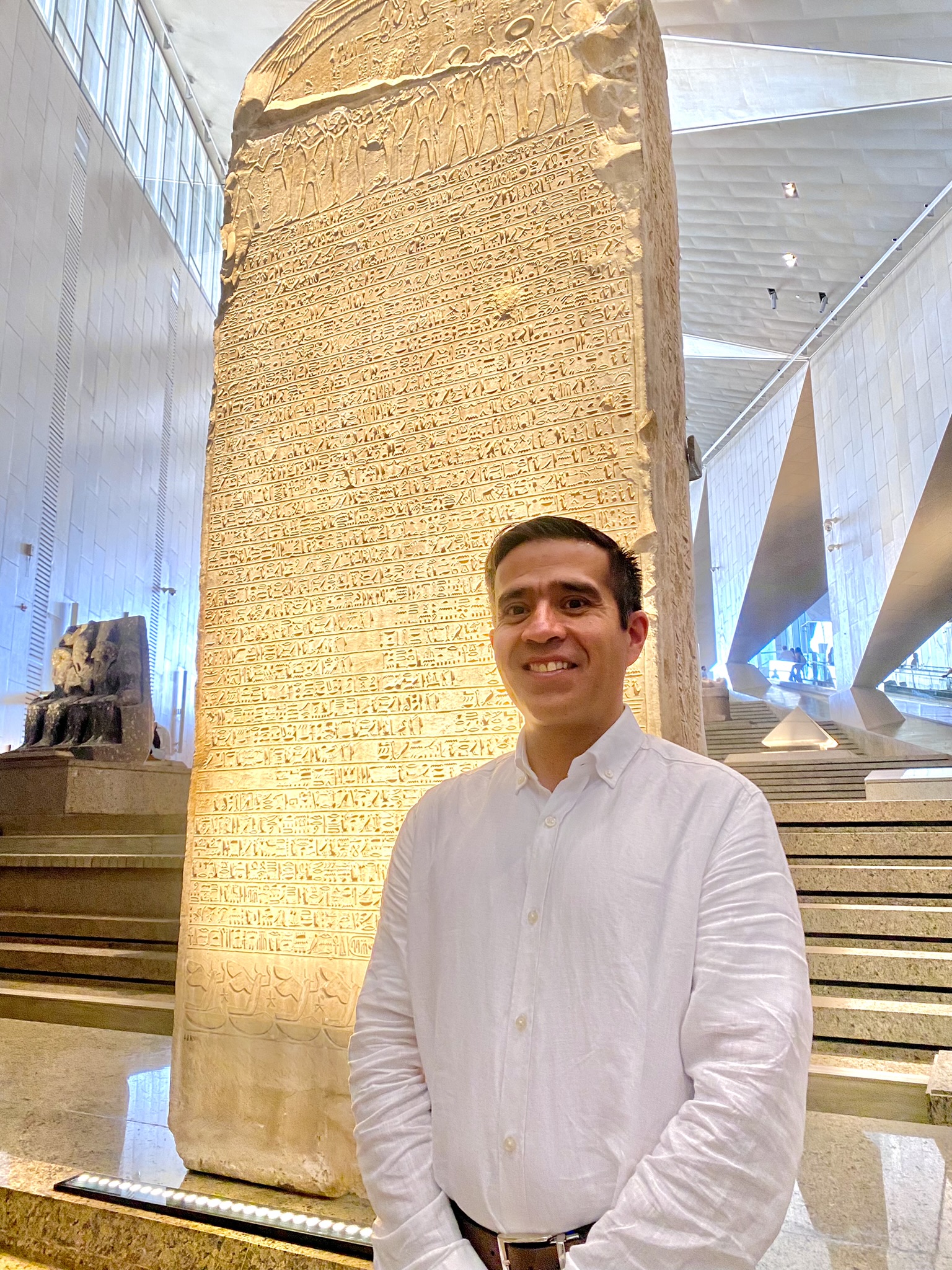
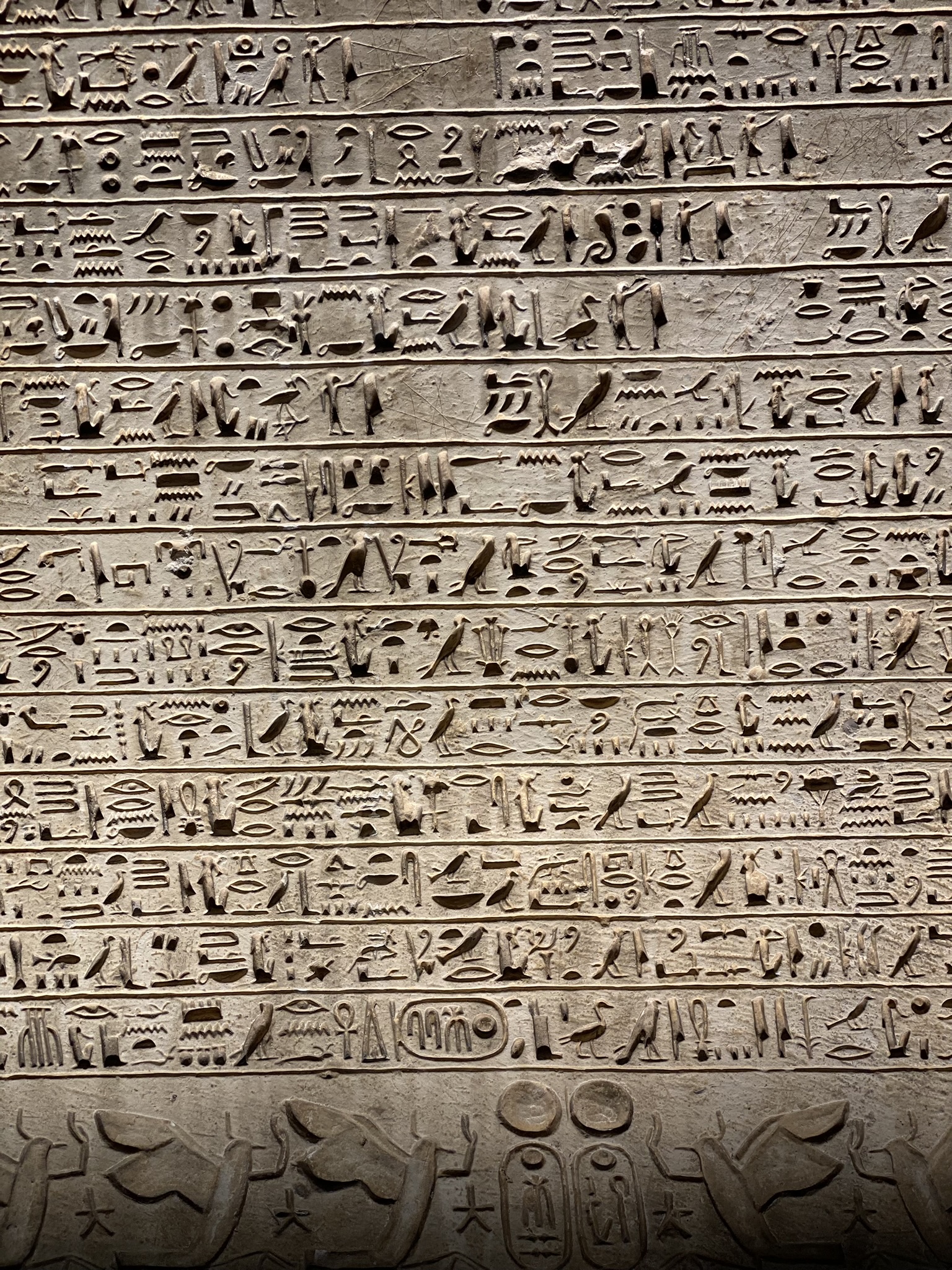
Once you get at the top of the staircase, the prelude to all this history:
The view of the Giza Pyramids!
The way the museum´s tour is designed It’s a totally powerful message, that puts you into the minds of Egyptians five thousand years ago who thought:
“Let’s leave our mark on history.”
I wonder if they imagined that five thousand years later, we’d be marveling at their structures and art.
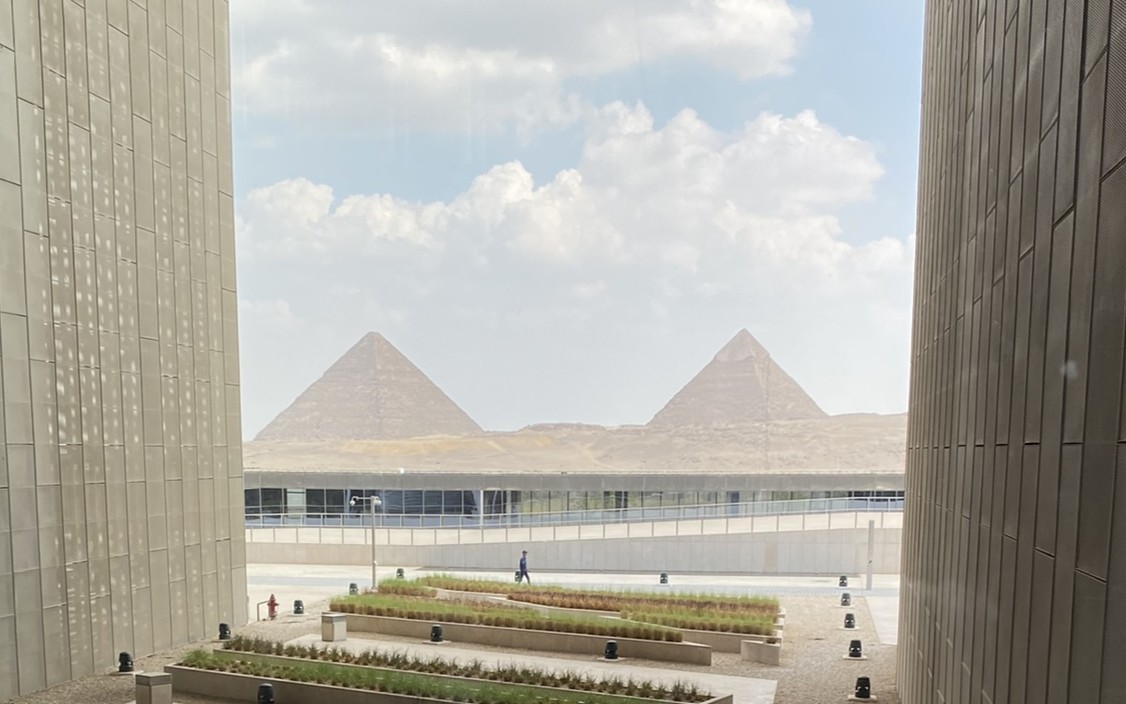
At this point, just the beginning, the tour takes you through halls narrating the historical periods of the ancient civilization. It’s a journey showcasing the oldest technology and art in a super-modern space, displaying this great history as it deserves.
From this area, I remember models of boats used by ancient Egyptians to navigate the Nile and the sea. The models included tiny human figures representing the crew—like a five-thousand-year-old Lego representation.
It´s a way for us humans to leave our mark in history. In five thousand years someone will discover a Lego representing our modern ships, I guess.
Toward the end of my museum tour, as I returned to the entrance lobby thinking about my next stop, I received a message from the airline saying I could pick up my luggage. I rushed to the airport, only to be told there was no luggage and to keep waiting for updates. They said the message clearly stating “you can pick up your luggage at our offices at Cairo International Airport” was just a notice that they were searching for it.
I returned to the hotel, very upset with the airline for wasting my time and money, since it was just around 4:00 pm when I ended up the museum´s visit and it took long for them to tell me the luggage hadn´t actually arrived. I lost more than four hours in which I could have visited something else, and I finally settled into my room around 8:30 p.m. and, having eaten nothing since morning, I realized it was nearly 9:00 p.m. as I finished unpacking the few items I had and freshening up. I rushed since I wasn’t sure if I’d find anything good open at that hour.
So, I went out to find something to eat on King Faisal Street and I was amazed again. It was past 9:00 p.m., and I found a street buzzing with incredible activity—cars coming and going, cafes and restaurants full of people, shops open and receiving customers, and the street seemed endless. Businesses of all kinds stretched on.
That doesn’t exist in Mexico!
Like Cairo, Mexico City is among the world’s ten largest cities, but you don’t find that here. Francisco I. Madero Street and its continuation, Avenida Juárez, in the Historic Center, would be the closest to King Faisal Street, but at 9:00 p.m. on a weekday, you’d only find a few restaurants open, and the street is nearly empty, with people already home or heading there to rest for the next day.
On King Faisal Street, it wasn’t about finding something to eat—I could choose whatever I wanted and ate too much that night. I had a dish I didn’t know the name of, but it was delicious: a kind of Arabic bread stuffed with chicken, baked in a wood-fired oven, with a dressing that made it amazing. I think the restaurant was called “Uncle Sam.”

After eating, I remembered I’d slept little and was exhausted from the trip and the day’s activities, but I still walked a bit more to keep exploring King Faisal Street, still in disbelief at what I saw, and to let the food digest. I wanted to keep going, but exhaustion won, and around 11:00 p.m., I returned to the hotel to rest.
**Monday, May 5**
I woke up as early as I could and arrived at the Giza Pyramids around 9:30 a.m.
In preparing for my trip, I read about the new entrance, still in testing, designed to avoid crowds, mainly caused by insistent vendors that would be too pushy with visitors, making the experience less pleasant and resulting in unsatisfactory tourism figures.
Arriving via this new entrance, I had the same experience as at the Grand Msr Museum the day before—a wide avenue leading to a spacious plaza for comfort and on an elegant marble welcome wall, a sign read:
“Welcome to the Giza Pyramids. Built for Eternity.”
This powerful message, topped with an architectural feature where a beam of light, angled like the pyramid’s face, grazes your head as you take a welcome photo.
Speechless!
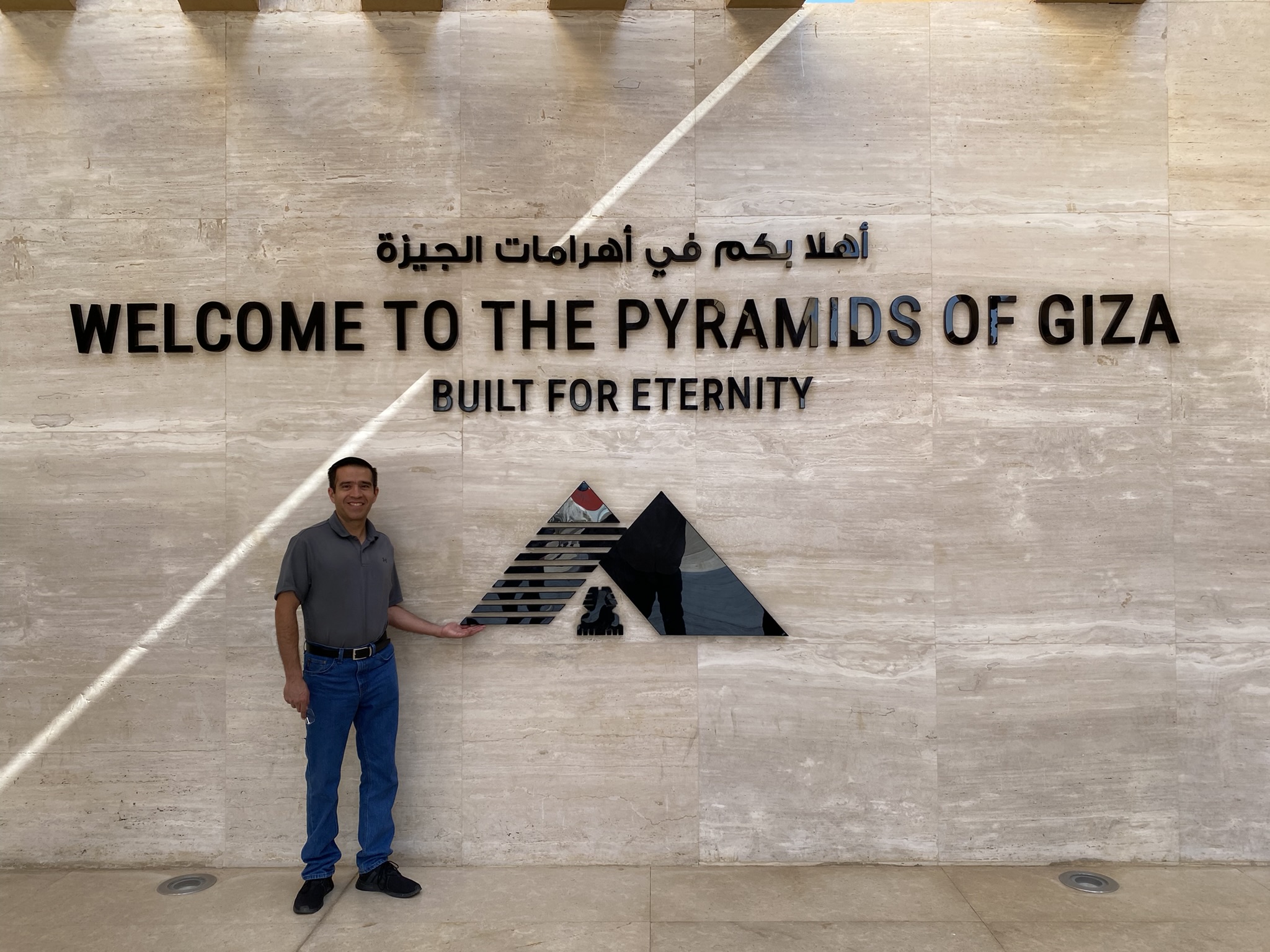
The next step is buying your ticket and starting the tour in a welcome hall preparing you with information about what you’ll see in the next two hours.
A modern spacious room with an inviting environment, because you can see tourist and guides talking and reading the historical background on the ancient civilization and specifically the pyramids.
I loved the pyramids model in this hall.
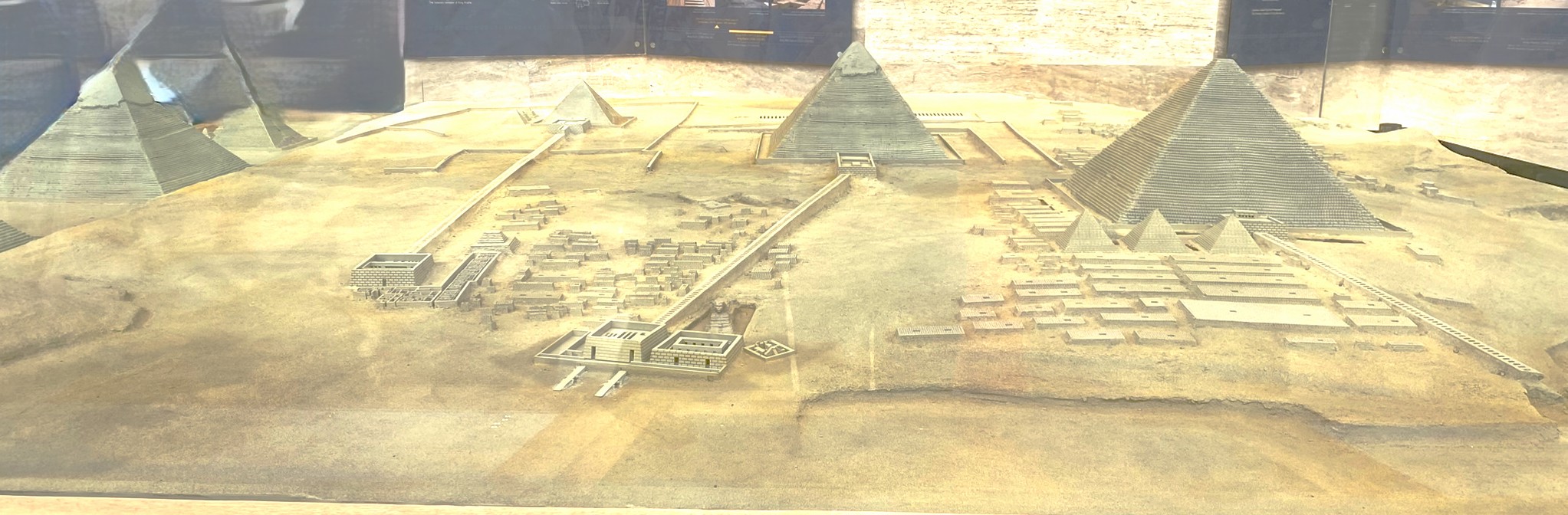
After this brief introduction, the tour takes you to transportation that moves you through the archaeological site.
I’d read that electric buses would be available every five minutes to take visitors through the tour’s stages.
However, I understand there were some criticisms, as some said the transport wasn’t sufficient in the early testing days, and tour companies struggled to keep groups organized since their buses were no longer allowed.
As a solo traveler, I experienced none of that—everything was extremely fast and comfortable. Buses didn’t come every five minutes but one after another. The time between buses was just the time people took to get into the bus and once it was full, the next was already waiting for the rest of the people in line.
I should note that I never rode one of the electric buses provided by the site’s organization, though I saw them operating. Instead, I seemed to ride buses from tour companies that allowed any visitor to board, regardless of whether they’d booked with them.
I reiterate, this was my perception—I’m not sure if that’s accurate. But if I’m right, it was a brilliant decision, as I experienced none of the chaos mentioned in early reviews of the new entrance. I completed my tour smoothly, enjoying the goal of appreciating millennia-old monuments and architecture.
I passed through panoramic pyramid views, then closer views, reaching the famous Sphinx around 11:00 a.m.
No crowds, no hassles—a very organized, pleasant visit, I finished around noon.
In summary, a well-organized tour honoring Msr’s millennia-old culture.
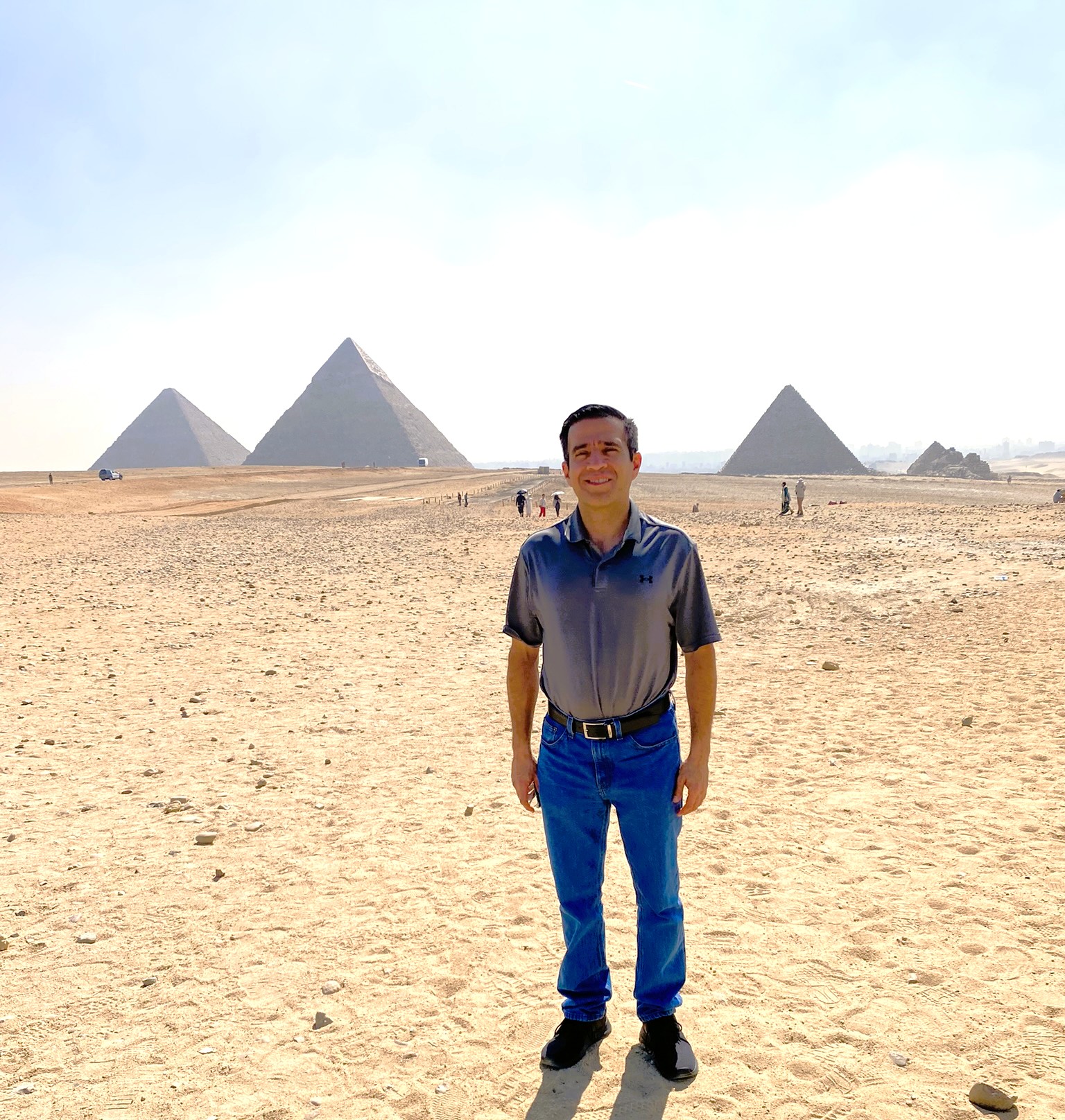
In the second half of the day, I strayed from the typical tourist path and visited Sheikh Zayed City with two goals: to see ORA Developers’ projects firsthand and to witness the trend in Arab nations of building cities from scratch, designed for the future to spark economic and social development.
This was evident even from reviewing on Google Maps, where you see a street layout and public works giving order to housing and businesses, avoiding improvisation and chaos. Seeing it in person confirmed this—buildings following a territorial plan, with uniform aesthetics and wide four-lane avenues allowing smooth traffic flow. I’d heard repeatedly about Cairo’s traffic, but in my five days there, I never saw congestion that wasted my time as I’d expected, neither in old Cairo nor the new cities. The traffic is nothing compared to what you see in Mexico City.
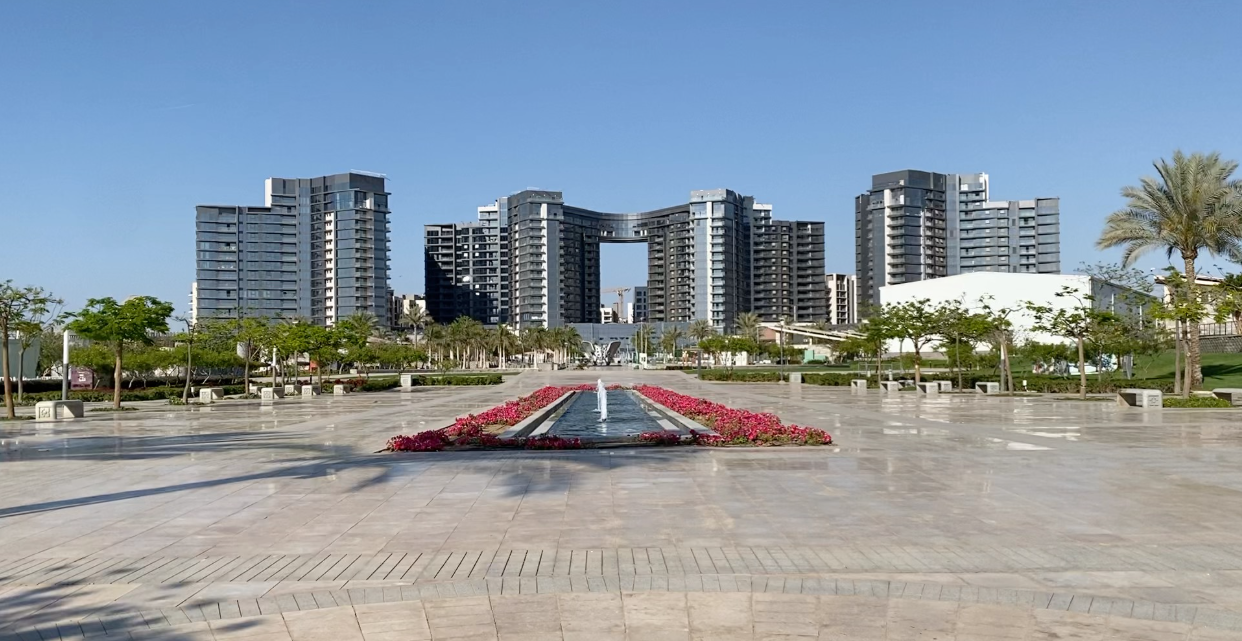
I stayed in Sheikh Zayed until about 9:30 p.m., then decided to return to King Faisal Street, as I’d wanted to explore it further the previous day. I asked the taxi driver to take me to a place on the street where I could eat a typical Msr dish, and he took me to a small restaurant where I had fried chicken with vegetables and a delicious dressing. I left around 11:00 p.m. and walked for about half an hour, observing the shops and general activity.
I thought I was nearing my hotel, but when I checked Google Maps, I realized it would take at least another hour on foot.
King Faisal Street is very long, and the commerce doesn’t end!
I took another taxi to the hotel, arriving around midnight to rest and continue the next day and while settling in, I received the message inviting me to give the lecture at the university.
This time, I didn’t hesitate and replied with a yes in a second.
I went to sleep with mixed feelings, as the invitation came amid the craziest business idea, which taught me to respond quickly to opportunities, though it was a lesson applied a little too late.
**Tuesday, May 6**
On my third day, I’d already had quite a bit of activity, so I started a bit later and headed to New Cairo around 10:30 a.m. to see more recent urban developments. I found wide avenues and infrastructure planned for decades to come.
Throughout my Cairo visit, I was surprised by the amount of construction scattered across the city. Everywhere you go, you see new projects mixed with ongoing ones. I’d visited Sheikh Zayed the day before, now New Cairo, and along the way, I learned about New Giza, among others, marking the start of Msr’s future.
In New Cairo, I visited ORA Developers’ offices, where Mark kindly took me to see the ZED East complex. On the way, we talked about New Cairo’s creation, and Mark told me it wasn’t that new anymore, being over 20 years old. He said he grew up there, recalling how there was almost nothing when he was a kid, but his father joined the bet on what was then New Cairo, and it turned out very positive for their family.
– ‘So, can we say New Cairo is a success?’ I asked.
+ ‘Yes, it’s a success.’
This, as he drove me through wide roads with new developments visible on both sides, showcasing an impressive amount of construction evidencing a drive toward the future.
My visit to New Cairo confirmed that Msr has its sights set on the future, with projects clearly aimed at the next 50 or 100 years.
Later, back in Mexico, I realized visiting ZED East put me just 10 minutes from the entrance to the New Administrative Capital, which I didn’t visit because I thought it was far away.
Oh well, I missed the spectacle for lacking a bit of curiosity at the moment.
They say ignorance is bold.
Since I hadn’t researched this, I’d seen what I wanted in New Cairo by 1:30 p.m., leaving me plenty of time that day. I decided to visit Saladin’s Fortified Citadel.
As if the Giza Pyramids weren’t already a strong testament to Msr’s importance in human history, this ingeniously planned city, designed to defend against invaders, witnessed 700 years of rulers and historical periods. I learned that by the time of its construction, Msr and Cairo had already experienced Greek and Roman influence, with Arab culture and Islam ultimately shaping its current identity. The Citadel of Saladin is a history in itself.
From the citadel, I took what, I am sure, it has to be the classic panoramic photo of Cairo.
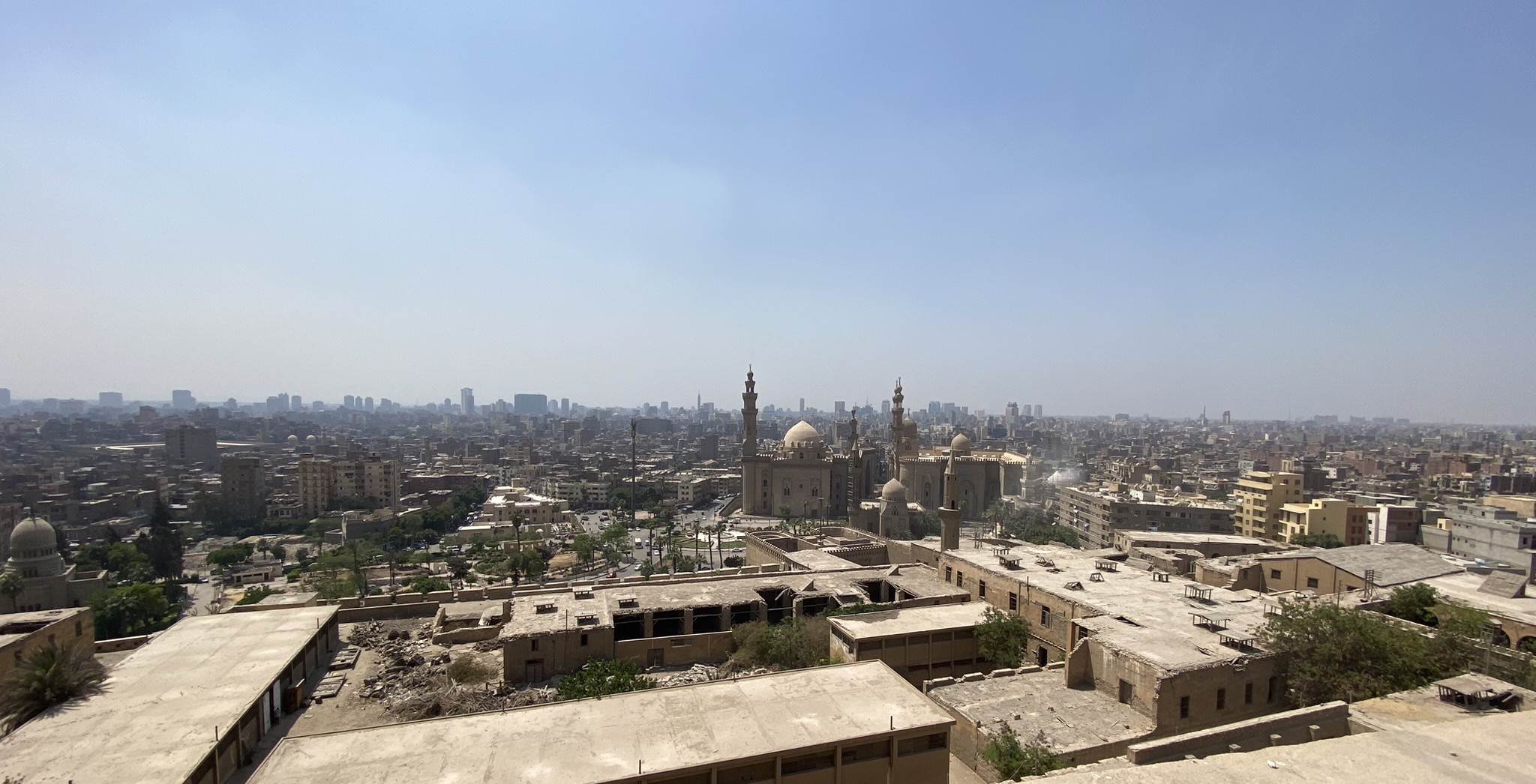
I finished my tour around 4:00 p.m. and went to Zamalek to buy the concert ticket for the next day at the Cairo Opera, as I couldn’t purchase it online, neither from Mexico nor in Egypt. I took a walk along the Nile River, as I hadn’t had the chance the first day, staying until about 7:30 p.m. before returning to the hotel to rest before dinner.
And where did I go to eat?
King Faisal Street, of course!
Where else?
I also needed to buy a shirt, jacket, and tie for the opera the next day. After doing so, I went to eat—fried chicken again at a restaurant called Ahl Alraya on King Faisal and Mariottia Corridor.
And this was the best moment of my entire trip.
After dinner, next to the restaurant was a store called Andora Collection, selling clothes for the whole family. I was looking at the display, intending to find something for my two daughters and son as a souvenir from Cairo, when two boys approached me—one about 14, the other around 10.
They asked me something, but I only caught “good evening” and something about the clothes I was looking at. Using a translator, I told them I was looking for gifts for my kids, and the older one pointed to his torn shirt.
I understood they wished they could do the same—think about having the opportunity to buy new clothes. They saw me leave the restaurant with a bag of clothes I’d bought for the next day and now looking to buy for my kids.
Throughout the book, I talk about dreams and aspirations for a better life, fighting for what you want without limits, and I’m sure I’ll achieve it sooner or later. Still, I try to stay grounded, reminding myself that I might already live the life many dream of, with my family, the ability to travel, buy, and even splurge thoughtlessly on motorsport.
I invited the boys to come with me, and they ended up buying about three shirts and two pants each, plus clothes for their dad. They were worried I’d notice, but what did it matter?
Later, I realized I got carried away as they didn’t get anything for their mom or possible sisters.
In the end, I got the best memory, as they left happy with their clothes, giving me a hug and a kiss on the forehead.
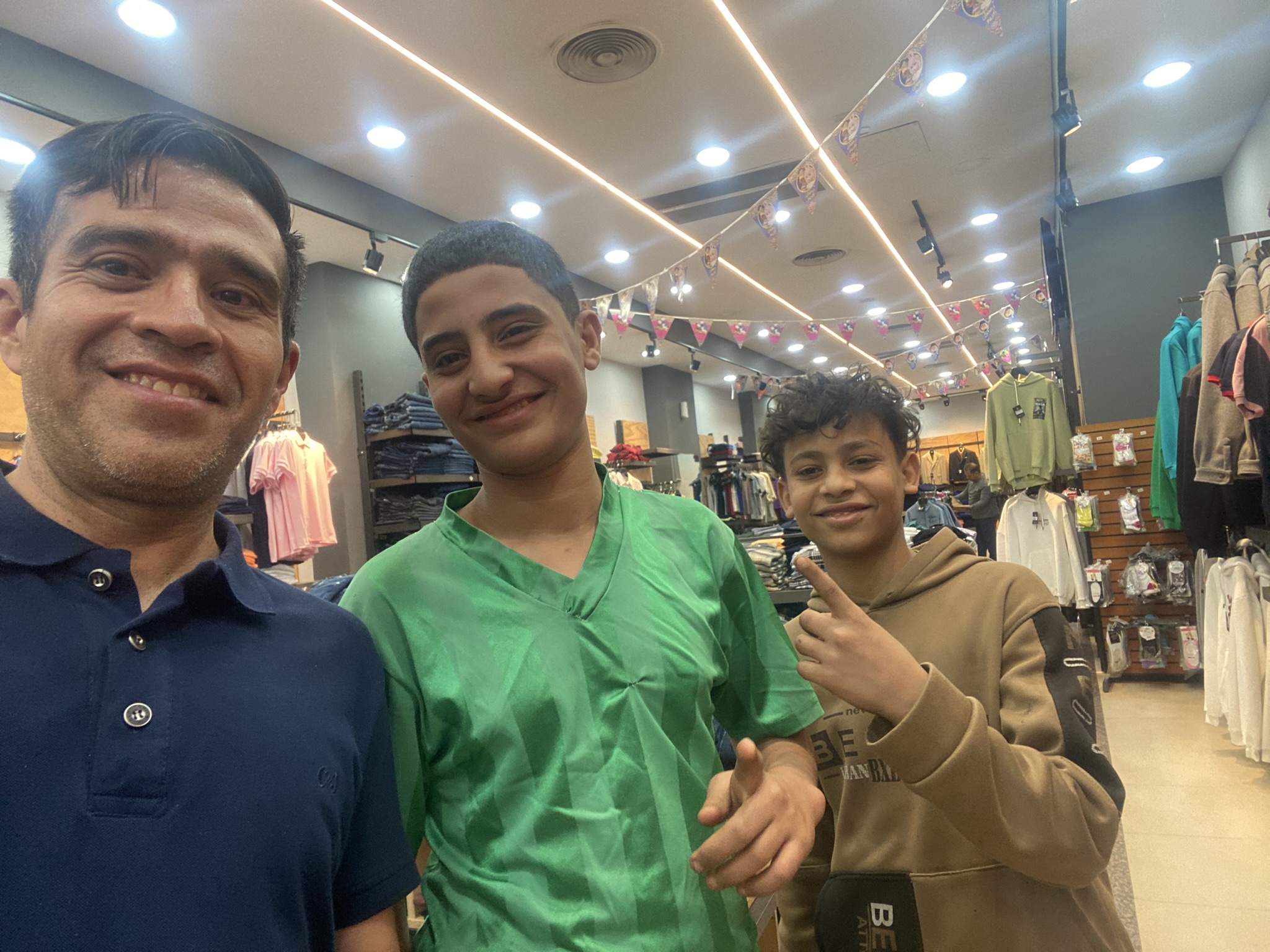
**Wednesday, May 7**
On this day, I visited two ORA Developers projects.
Pyramid Hills, mainly a private residential complex with some businesses, some areas offering views of the Giza Pyramids.
And since Mark had suggested the day before that I should visit their offices in ZED Park to see models and the customer service area, I went again, as I’d arrived too late on Monday and found it closed.
Ashraf kindly showed me the office, the Italian restaurant, and presentations about the company’s projects.
After these visits, I returned to the hotel to prepare for the concert scheduled at 7:00 p.m. at the Cairo Opera.
When I arrived, I went to the entrance and followed the crowd socializing in the lobby before the performance. As I mentioned, I was there because Engineer Naguib Sawiris had announced his presence weeks earlier, though his social media showed him in Iraq the previous night. But minutes after I arrived, he entered, surrounded by friends, with press approaching for questions. I was about five meters away as he chatted with acquaintances and greeted others.
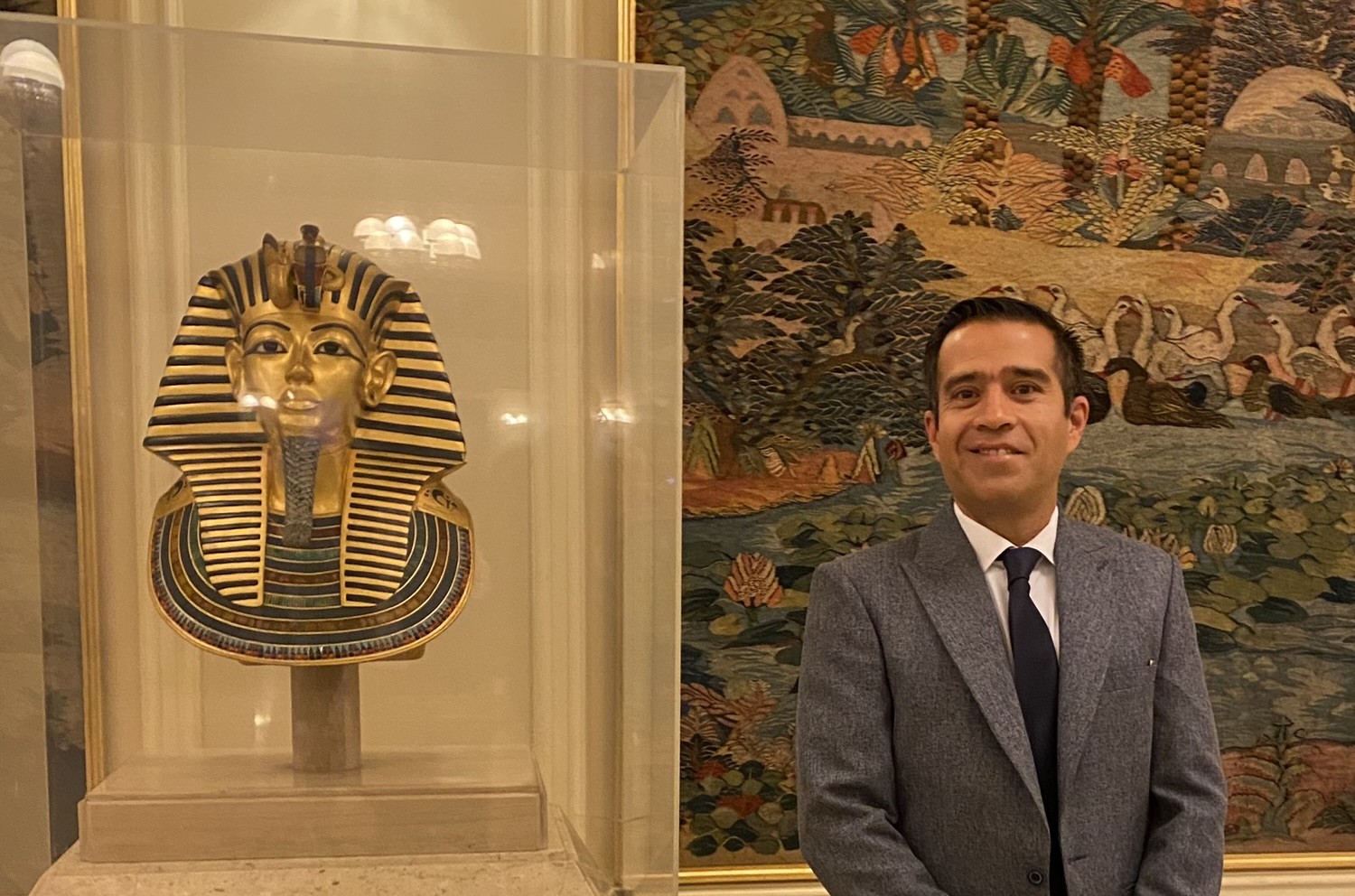
Since my ticket purchase was late, I watched the concert from the second floor and simply enjoyed the performance. It showed me the Sawiris family’s significant influence in Msr. At the end, as I went to the reception area, Engineer Naguib Sawiris was leaving, followed by friends but alone enough that he passed just meters from me. I could’ve been bold and stopped him to say hello, as I could’ve before the concert, but it wasn’t the moment—I’d considered this beforehand.
This video shows one part of the concert and one of the people you see in the front rows is Naguib Sawiris and now that I am making the final revision of the book and loading images, I come to realize that I could have sent him a Whattsapp message and let him know I was there and see what happened, but the truth is, as I said before, I didn´t want to push anymore and probably I wouldn´t have done it anyway. Maybe even I thought about it in that moment and decided not to.
After leaving the opera, I walked to the Nile River to see it at night and crossed the bridge to Al Tahrir., where I looked for a place to eat, opting for seafood, as I always try it when traveling.
On the way, I got a call from the hotel saying someone from the airline was at reception delivering a suitcase in my name. I was grateful I’d decided to buy a new bag until the next day, as I’d need to pack the clothes I’d bought in Cairo and the gifts for my family.
I arrived at a Fish and Chips restaurant, with a name I read in Arabic as Asmk Alshamyi. I should clarify that, while I said I feel like a beginner with Arabic, I can read and transcribe it quite well, though I don’t always understand it. I can reproduce how a text would sound read aloud decently.
I ate a fish stuffed with seafood, accompanied by rice and bell peppers.
Delicious!
At the hotel, they gave me my suitcase with the clothes I’d packed for a trip where I’d return looking good in my memories. But I’d gone to the pyramids in the same clothes I wore on the plane, and what angered me most about the airline losing my luggage was not following the lesson I learned in Italy—not looking like a tourist.
My wife, who’s taught me the importance of taking good photos, said:
– ‘You should’ve bought clothes!’
+ ‘I didn’t go on the trip for that. I went to see the city, and shopping for clothes would’ve been a waste of time.’
Now, choosing images for this book, I think three hours shopping wouldn’t have been bad, after all. I had to buy clothes during my stay—it would’ve been the same to buy everything at once.
**Thursday, May 8**
On my return day, I’d planned to go back to ORA’s offices in Nile City Towers to say I was leaving and mention my visits to the ZED complexes, Pyramid Hills, the Grand Egyptian Museum, and the new Giza Pyramids entrance.
I’d planned this since April.
I’d imagined that if I spent the whole week in Cairo and didn’t get a meeting, and even if I couldn’t speak with Engineer Naguib Sawiris at the opera, I’d go early Thursday to say:
– ‘Hello! I’m still here, friends! I’m Eduardo, and I came from Mexico because I’m a true admirer of your work, and I’m leaving today at 11:30 p.m.’
Who knows?
Maybe I’d find Naguib Sawiris and have a last-minute chance to talk, but I’d ruled that out the night before and even since April 22. The dates my mind had visualized had passed. I formally received the Silversands brand from its former owner in the first week of April 2024, registered the ownership change with the Mexican Institute of Industrial Property on April 14, and started researching the brand globally around then. I learned about Silversands Msr during those days and set a one-year deadline for the adventure I described, so the April 22, 2025, response came within my target timeframe to bring an ORA Developers Silversands to Mexico.
As a psychologist, I’ve learned that’s how the mind works and how powerful it is.
So, I changed my plan and slept as late as possible. The hotel reception knocked on my door around 12:30 p.m. to say my reservation was expiring and it was time to check out. I told them I’d keep sleeping and to charge me the extra needed.
In the afternoon, I went to the airport, arriving with time to buy souvenirs at the Duty Free. I found what my wife loves bringing back from trips to faraway countries—exotic fruit-flavored teas—and bought about ten boxes.
Those teas were my last purchase in Msr.
Back in Mexico, I realized they’re essences containing tobacco, used in the pipes you see in so many Cairo cafes.